Methods to Avoid Negative Impact of the Cinema on the Adolescents

By Shaifali Puri

It is an accepted truth all over the universe that whatever a person sees in practical shape leaves a permanent impression on the mind. The same law applies to the cinema. It is a media that always leaves a deep impact on the minds of the audience. This is true especially in case of the adolescents. The age of adolescence is the age when one is like wax, turn the way you want. When someone ponders over the question, as to what cinema is, the answers that readily come to mind are “An art form”, “A means of telling stories”, “A business”, “An entertainment” and possibly several other similar phrases but of course, these are not the real definitions of cinema. In fact these are the theories or the concepts that one develops while watching cinema. It is these pseudo definitions that nurture whole set of attitudes towards cinema and mask out important issues. If one looks at the general opinion about cinema, will find quite a different type of impression coming up. When one looks at often vague and pseudo-definitions of cinema one feel that the simple evocation of cinema arouses deeply personal resonance. But the cinema does not perform only this function. Apart from arousing feeling cinema also plays a very important role in day to day social as well as moral life of people. Cinema is such a subject, the study of which provides a peep into the life and atmosphere of the society in which it is produced. It is such a media that effects the changes in the life style of the society and is within the reach of all. Various ways and methods can be adopted to avoid the negative impact of the cinema on the personality of the adolescents. These methods are to be adopted at family as well as social level.

  • Students at all levels of education should be encouraged to watch educational or patriotic movies to ensure harmonious and positive development of personality.
  • Seminars, open discussions, lectures etc should be arranged where in positive and suggestive communication should take place among teachers, parents and children.
  • Mass media should be made responsible to carry out the job of ensuring production of reality based and morally suggestive programmes and movies.
  • A strict distinction should be made between the movies for young and for adult public. This kind of restriction should be strictly followed.
  • The stars and the artists should take initiative to propagate the fact that what ever is shown on silver screen should be watched only with the point of view of entertainment. It should not be imbibed in real life.
  • Print media can be used as a powerful source of propagating the abstract nature of silver screen. It should try to put positive influence on the minds of children by laying bare the truths of cinematic life.
  • Sex education should be provided to children to prevent them from developing wrong notions about sex, under the influence of movies and other programmes.
  • There should be proper and regular interaction between teachers and parents in order to discuss the changes taking place in the personality of child.
  • The ministry of education should establish a strong control on the conduct of cinema. The producers should be asked to maintain moral conduct in the movies they produce.
  • There should be TV. shows where in the realities behind all that is depicted on screen, should be shown so that the children do not look at it as a dreamland and do not blindly follow it.

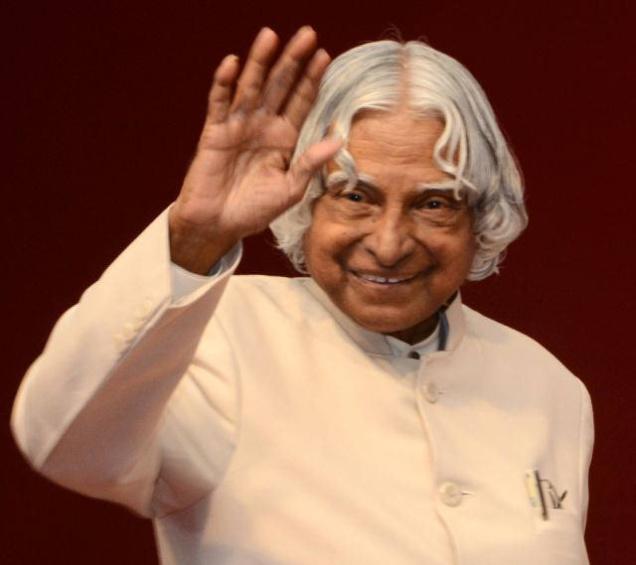
Dr APJ Abdul Kalam

Dear Readers/Friends/Well wishers,

Our loving teacher and visionary, one of the rare personalities former President of India Dr. APJ Abdul Kalam left us forever for his final journey. He suffered a massive heart arrest and collapsed while delivering lecture at IIM Shillong on 27th July 2015. Dr APJ Abdul Kalam served as the 11th President of India from 2002-2007. With his immense contribution at the Indian Space Research Organization (ISRO) he became popular as missile man.  He handled Project Devil, Project Valliant and launch of Rohini-1 and many more. He was a great scientist, a great visionary and a great thinker.

He will always be with us in our hearts.

May his soul rest in peace.

Stress: Relation with Performance, Causes and Ways of Overcoming

By Anamitra Roy

Relationship between stress and performance:

Stress (meaning as per Oxford Dictionary: pressure or tension, physical or mental strain) is generally believed to be a performance reducing agent. When a person undergoes stress, he/ she cannot perform up to the mark. Stress pulls a person back. Very often we become prey of stress. It is a state when a person gets perturbed by some external/ internal agent or phenomenon. The relation between performance and stress is believed to be inversely proportional. When stress goes up, performance goes down. Similarly, when stress comes down, performance goes higher.

But there are some exceptional situations. In some cases it is observed that during stress a performer’s performance graph goes higher. It is believed by many management experts that stress can also be a great motivator. It can act as a performance booster, as a catalyst. Here we can cite an example from the world of sports. At times it is seen there are some sports personalities who perform better when they are under severe pressure. This is because such personalities are great handlers of stress. Steve Waugh, one of the longest and most successful captains of the Australian cricket team is a typical example of such a type of a personality. His performance graph always used to go higher whenever he was under pressure and stress. This was an example when stress was acting as a motivating agent.

Many experts are of the opinion that during stress the options slowly get reduced. So it becomes easy to handle the fewer options and focus. That is why; it is a common practice among employers around the world to keep their employees under stress. However, in this context, it has to be said that the employers need to be careful in trying to motivate their employees by putting them under stress. This is so because too much application of stress creating agents may also reduce the productivity of the employees in the long run.

Thus, it can be concluded that the relationship between stress and performance is inversely proportional but it can also be made directly proportional. However, the natural belief is that these two are inversely proportional … always.

Common stressors that one experiences in an organization:

Stressors are persons or happenings that cause or increase the volume and the intensity of stress. A list of stressors that one commonly experiences in an organization, are as follows:

Work load:

When the volume of the work increases to an unmanageable level, then work seems like a load. This causes stress.

Job conditions:

When job conditions i.e. work environment, social recognition etc. changes or degrades then stress is caused.

Role Conflict:

When there is a role conflict in the job profile, then also stress is caused. Reasons of role conflict are lack of understanding of the job profile, lack of understanding of the circumstances prevailing around in the workplace etc.

Career Development:

When career development plans of an individual are not satisfied then stress becomes very common. This stress arises from frustration, dissatisfaction and depression, thereby giving rise to job dissatisfaction and insecurities.

Conflict between work and life:

The question of ethics is very important in development of stress. At times it is seen that an individual has to do a lot of things at work which he spiritually does not believe in. Sometimes the employees are forced to adopt certain unethical means to get the job done. This causes heavy stress in minds that do not accept these unethical means.

Work place aggression:

Workplace aggression (for example aggression showed for achieving targets) in today’s world is one of the most important factors that gives birth to stress. There was a time when this word “aggression” was used as a positive trait. But not in today’s world. Most modern day HR management experts treat aggression as a severe negative trait. This is so because it can help you to achieve your target but at the cost of putting other employees in the organization go through stress. Instead they believe that “assertiveness” can be treated as a quality.

It is due to this factor of aggression that a lot of people lose their job even. The growing rate of heart ailments, hypertension, memory and sleep disorders are results of workplace aggression causing stress.

Apart from this, under no circumstances can we forget the influence of personal lives in causing stress. Disturbances from home are at times brought in the workplace. Marital problems, fights with partners and children back at home, personal financial problems are common examples of stress boosting factors that grow from the domestic front but can ruin both the personal and professional fronts. In such situations it is better to get on with the “switch on and off” techniques. When you are managing the domestic front, just practice to switch off the worries and anxieties of the professional front and vice versa. However, it is easier said than done. It can be done by learning to forgive. A person undergoing stress from both the personal and professional fronts needs to understand that he is a normal human being and it is very much human to commit mistakes. He has to learn to forgive himself. It is only when you learn to forgive yourself, then you can practice the art of forgiving others and sometimes for severe stupidities that they have depicted. The art of forgiving yourself will enable you to reduce stress and practice “switch on and off” techniques.Remember for every negligence, for every criminality, for every stupidity, there is a forgiveness waiting for you, however, miniscule the intensity of that forgiveness may be.

You may have forgotten to get your personal pass books updated, you may have forgotten to deliver on a promise that you made to your wife/ partner, and you may have forgotten to submit the project report to your greedy boss before coming out of the office this evening. So what, there is always a second time and you can do it perfectly at the second go.

Measures that an individual and an organization can take to manage stress:

Handling stress and managing stress in the current era is one of the most challenging tasks for an organization as well as an individual. In this context, it has to be considered that stress can be managed or reduced, but never eliminated. That’s why, you hear terms like stress management techniques, methods, programs etc. You will never come across terms like stress eliminating techniques, methods/ programs etc.

An organization can take up the following measures to handle stress i.e. keep it as much suppressed as follows:

Job redesigning:

Generally it is seen that in most organizations, employees suffer from stress because the job does not suit them or they don’t suit the job. It is a question of a right man for the right job. In this case, if the HR department does a redesigning of the jobs in such a manner so that it suits the employees, then the stress level will automatically come down and the employees will be benefitted as their productivity will increase.

Goal setting:

If the goal setting is done in such a way that employee finds it relatively easier or at least in line of their interest then the stress levels will come down considerably.

Role negotiation:

When the role of an employee is clear to him or her, then it becomes easier for that employee to focus and perform, thereby reducing stress. This can be done through proper role negotiation.

Workshops:

A lot of corporate today arrange for yoga and stress releasing workshops. The employees are taught in these workshops to handle stress, control stress and minimize stress.

In case of an individual, the following measures can be taken up to manage stress:

Optimism:

One should practice to look at the world with optimism … it is to be believed that if winter comes, can spring be far behind. This will reduce the negative energy and induct hope, which in turn will help to reduce stress. After all it is rightly said that no one ever injured his eye sight by looking at the brighter side of life.

Time management:

One of the common causes of stress is not being able to achieve the targets within the stipulated time frame. Acquisition of better time management skills will enable us to manage the time better, utilize the resources optimally, reduce wastages, achieve desired results and thereby reduce stress.

This can be done by preparation of a job list after reaching the office in the morning and prioritizing the jobs to be done on that very day.

Hobbies:

To reduce stress, one has to spent time with oneself i.e. give time to himself or herself. In order to do this a hobby should be developed. I keep on hearing from people around me that they have absolutely no time to donate to themselves. I ask them, “Are you sure?” Personally I do not believe that you cannot have at least 30 minutes a week for yourself. Even the busiest of the personalities in this world like President Obama, Prime Minister Modi, Ratan Tata, Bill Gates and many others have at least 30 minutes a week for themselves, for family, for recreation. Have you ever given a thought to this that if man never had any time for hobbies and recreational activities then why were these two words included in the English dictionary or for that matter, from where these two words came?

If this is the case with your life that you do not have any time for yourself then it is not an example of a very hectic life. Unfortunately, your life has become an example of a life in which there is probably no time management.

Manage your time, prioritize your jobs, stop procrastination (or should I say in the words of Brian Tracy, “Eat that Frog”) and get going. You will have enough time for music, movies, politics, theatre, philately, numismatics, research and many other hobbies that can give you a lot of good times.

Exercise:

Physical exercise burns out the extra calories and releases oxytocin that make you feel happier. It increases the capacity of the mind to stay with problems longer. This increases the stress handling capacity of the body greatly.

Diet:

Maintenance of a proper diet i.e. avoiding of spicy food keeps the mind relaxed. Your metabolism rates will be higher. World famous management expert, BryanttMcgill has designed stress management programs which consist of recipes of non-spicy foods. Moreover, avoiding junk food which is rich in salt content will keep your blood pressure level under control. Thus, stress can be reduced.

Counseling by professionals:

Stress is very common in the present age. Despite best efforts at times stress cannot be checked. In such a case, it will be better to take professional help. Counseling by professionals can be immensely beneficial.

Sharing problems:

Many a time stress is created in the mind because there is no vent or crater. Sharing the unhappiness and problems with others can help to release the stress through these craters. Start developing friends. Interact more with family. You will soon have a lot of people around you who will be interested to listen to you.

In this context, let me share a personal experience. I am in my early thirties and I have so far worked with 6 employers in my professional life. With some employers I have worked for as long as five years and with some I have worked for as long as less than one month. Whenever I tried to analyze my stint with my employers, shockingly I discovered that stress played a very important role in deciding if I should carry or not. It was not the nature of the work, work environment, job satisfaction, job enlargement or job enrichment that decided if I should carry on or not.

I have spoken to a wide range of HR executives from around the world. I discovered that almost all of them were of the opinion that stress was the deciding factor for HR reshuffling.

In today’s world with the growth in business complexities, stress can be a serious issue when it is pulling you back. Therefore we all should adapt to it and learn how to react to it.


“It’s not stress that kills us, it is our reaction to it.”

Hans Selye
Influence of Impurities in Sugar Technology.

By Aamarpali Puri

Starch and Dextran

Starch is a natural constituent of sugarcane. Starch gets gelatinized by heating during juice clarification and is removed to an extent of 30-35 % but the rest gets concentrated in the process stream due to evaporation of the clear juice. The resulting harmful effects of it are the increase in viscosity and poor juice filterability. Mechanical harvesting has resulted in an increase in the quantity of bacterial polysaccharides like soluble dextran in the juice. Dextran that enters the juice remains with it until crystallization of the sugar. Dextran formation causes sugar loss, processing problems and increases the viscosity manifold. This increase in the viscosity decreases the clarification rate and gives poor clarification, which in turn leads to crystal elongation and hinders the heat transfer process. It has been reported that dextran hinders the crystallization process by a temporary adsorption on especially the glucose fructose portion of the molecule.

Phosphate
Phosphate is natural constituent of sugarcane. In sugarcane the leaves with high phosphorous levels have more photosynthetic activity than those low in phosphorous. Shoot and root development benefits much from this element. Phosphorous deficiency causes shortening and thinning of stalks which, taper at growing point. Root system is retarded, there being very limited secondary roots. It has significant effect on the rheological characteristics of final molasses. It exhibits functional properties in a wide variety of foods produced by all segments of the processed food industry. Phosphate [Potassium dihydrogen phosphate, (KH2PO4)] is present in the form of soluble phosphate in sugar cane. Phosphate may absorb or complex with proteins and starches by virtue of their high charge. The charge and the extension of protein are altered, thereby affecting its colloidal properties. Phosphates can, therefore act to modify the processing characteristics or stability of proteins. Presence of phosphate in cane juice is essential for good clarification. If present in optimum concentration, it has beneficial effect on crystallization of sugar. It tends to form heavy precipitate of tricalcium phosphate, which not only removes the colloidal and other impurities but also absorbs much of the coloring matter and diminishes the calcium content of the clear juice.

Silica
 Cane juice is probably saturated with respect to silica. In cane juice the presence of silica creates industrial problems by the formation of scales during sugar crystallization due to silica deposition as calcium silicates (CaSiO3). Scales are hard deposits, which stick very firmly to the inner surface of the boiler. Scales are so hard and adherent that it is difficult to remove them, even with the help of hammer and chisel. There in lies the need to determine the concentration of silica in cane juice.

Alanine and Glycine

Amino acids are of importance as they along with other nitrogenous bodies reacts with reducing sugars and form colored compounds. Also it is found from the static (Wei-Jun and Wu-Chang, 1992) and dynamic analysis that different colorants such as caramel, an iron-phenolic body complex, and the browning reaction products from reducing sugars and amino acids, have different affinities for the crystals and cause different coloration under the same conditions. In industry, so many efforts are done to remove color. Analyzing amino acids in a sample can help solving color problem in sugar to some extent. Alanine and glycine are amino acids commonly found in sugarcane. Alanine is a non-essential amino acid and was first isolated in 1879. It is one of the 20 amino acids used to synthesize proteins in terrestrial living organisms. It is an inhibitory or calming  neurotransmitter in brain. Alanine (Molecular formula C3H7NO2) is the major amino acid present in cane juice. As percentage dry solids, the alanine is 0.06% free and is 0.05% as protein. It is hydrophobic, with a methyl group side chain, and is the second-smallest of the 20 after glycine. It is also known as 2-aminopropanoic acid. Its alpha carbon atom is bonded to a carboxyl group (COO-), an amino group (NH3+), a methyl group (CH3), and a hydrogen atom. It exists as two distinct enantiomers, L-alanine and D-alanine, the former of which is used in protein synthesis. Glycine (Molecular formula C2H5NO2) which is the other major amino acid present in cane juice is polar, uncharged, neutral and genetically coded amino acid. It is the only protein forming amino acid without a center of chirality. Its alpha carbon atom is bonded to a carboxyl group (COO-), an amino group (NH3+) and two hydrogen atoms. As percentage dry solids, the glycine is 0.01% free and 0.04% as protein in cane juice.

Oxalic acid

Oxalic acid and oxalates are mild nephrotoxic acids that are abundantly present in many plants. It is one of the major acids present in cane. The high oxalic acid content is an effective browning inhibitor in cane. More over it binds vital nutrients such as calcium, so long-term consumption of foods high in oxalic acid can lead to nutrient deficiencies. So in the present study the effect of oxalic acid on the growth rate of sucrose crystals at two degrees of supersaturation, at two temperatures and at two different seed sizes of sucrose crystal has been studied. Till now no general applicable theory exists which predicts effects of all the factors that govern the process of crystallization from the solutions, accurately and completely.

Sulphur
Sulfur is a contaminant, which enters sugar during refining. Most sugar mills go through a process of sulfitation during the refining process, and the exact quantity of carry over of sulfur during the post sulfitation stages is not well known. But sulfur dioxide through bisulfite formation can form additives complexing with the aldehyde and ketonic groups of the hydrolyzed sugar moieties. Sulfur in foodstuffs is found linked to colon rectal cancer. Sulfur is believed to destroy Vitamin A, as it promotes the oxidation of the conjugated double bonds, and is also known to destroy Vitamin B1. Sulfur and sulfur dioxide are also known to promote allergies and accelerate the onset of allergy attacks.

Effects of rap and hip-hop lyrics on teen language / behaviour

By : Prapanna Lahiri

Oxford Advanced Learner’s Dictionary defines Rap as “a type of popular music with a fast strong rhythm and words which are spoken fast, not sung.” It is kind of chanting of rhyming speech or poetry combined to musical beat. Such improvisational poetry sounds catchy and is something one can dance to. Rap and hip hop are two of the most popular genres – or styles – of music. The hip hop subculture grew first among the African American and Latino American communities. Initially focussing on issues that were not receiving regular media attention the subject matter later ranged from local events to relationships. Hip hop music is meant to express hope for the future and to remember the successes of the past. Rap artists are predominately men while hip hop music is a mixture of men and woman. The American rapper and hip-hop philosopher KRS One distinguished the two terms stating that rap is something that is done, while hip-hop is something that is lived.

These two genres have had enormous impact on mass media and modern western culture in as much as they influence everything from commercials to politics. There are mixed effects when one turns to the effects of hip hop/ rap Music on the younger generation of today. While some rap and hip-hop music and the artists can stand for good influences on the youth promoting self expression, this genre of music also can have some extremely negative impact on the attitudes and behaviours of the young. With the rising popularity of rap music, teens have been turning to music to help solve their problems. But sadly, this style of music instead of being helpful has proved to be very destructive. The effects of these lyrics on adolescent language and behaviour have been huge, influencing and damaging the minds of children, teens and young adults, making them more violent and aggressive. More and more students in America are being arrested and taken to juvenile detention centres due to fighting or bringing weapons to school.

The provocative lyrics began promoting violence, money, drugs, alcohol, sex and degrading women. The influence of such lyrics is inappropriate for children since they tend to mimic what they see and hear. This is undesirable as the society does not want them to mimic the rappers. The future generation needs to be shielded from the inappropriate impact of rap and hip hop music of today.

References:

http://www.wisegeek.com/

http://www.ebony.com/entertainment-culture/the-difference-between-rap-hip-hop-798#ixzz3gJQvaAOH

http://www.studymode.com/

https://prezi.com

http://eng02-kat.blogspot.in/2011/12/effects-of-rap-and-hip-hop-lyrics-on.html

5 Steps to Develop Reading Habits:

By: Anamitra Roy

“The whole world opened to me when I learned to read.”

Mary Mcleod Bethune

Reading is considered as one of the most popular habits in the world. But at the same time it is also considered as one of the most unpopular habits. This is so because if you are born with this habit then you have received one of the nicest gifts ever. But if you were not and are trying to grow it within you then you may have a tough time.

Here are some simple steps to develop reading habits:

  1. Get Ready:

Henry Ford once said that getting ready is the key to success. So you need to get ready before you start with a new habit. You have to create the situation around you that will help to inculcate the habit. Do not expect too much out of yourself. Just think of creating the situation that will push you towards this habit.

  1. Surround yourself with books and book lovers … a situation for inculcating a reading habit:

Almost always when you meet a doctor and complain to him about sleep disorders, you will see that the doctor is asking you to not watch violent movies or read thrillers before you go to sleep. Like any other machine, the brain also needs time to shut down. Similarly, the brain also needs time to prepare itself to accept a new habit. So first of all, surround yourself with books and book lovers. You will see that you are getting ready to accept reading as a habit by doing so. This is the first step of preparing your mind to develop the habit of reading.

  1. Eat that Frog:

Now that you have a lot of books and readable, you have surrounded yourself with book lovers and readers, this is the best time to start with reading. But it surely is not an easy task. Remember, nothing in this world is actually easy. So you are up with a challenge that others are also facing but of course, may be in other spheres of life. Stop procrastinating and get going with the books and readable around you. For trying to stop procrastination just do what makes you go cold in your feet i.e. in the language of world famous management expert, Brian Tracy, trying to eat that frog. Brian Tracy almost always says that eating that dirty frog is almost equal to doing something that you hate. If you hate reading, you have to eat that frog i.e. you have to start reading.

  1. Demarcate the target into small fragments:

Sourav Gannguly, one of the batting maestros of the Indian cricket team scored a century in his first test match at the historic Lord’s. In an interview he said that he was actually not eyeing the century. Instead he was concentrating on reaching small targets of ten runs. Once he reached the first ten runs, he was again developing a target of scoring another ten runs. While developing reading habit, it is advisable to follow the same principle. Break the target into fragments. You do not need to finish the book at once. The book is meant to be enjoyed. So read a few pages. Come out of it. Then again read a few more pages. Give time to yourself. Just like a good quality wine can be enjoyed through small sips, similarly a book can also be enjoyed in installments. It is advisable to have patience while reading a book. The rule is simple. You do not need to finish it at once. Take your time. Enjoy it slowly, gradually but surely. Breaking the target into fragments helps you to stop procrastinating. Remember you do not need to climb the mountain by jumping at the peak. A thousand small steps and you are there at the peak. Similarly, one page at a time and may be that you have finished reading one of the bulkiest books around.

  1. Remember the Advantages of Reading:

When you read a book, try to take small pauses in between. During such pauses think about what the writer is saying. Think. Think and absorb. Try to implement in your life what the writer is saying. If you find positive results in your life after such implementations, then you will enjoy reading the book even more. This is a very easy way to motivate you to develop a reading habit. Secondly, remember that all of us have only and only one life. We take birth once, we live once and we die once. But a reader’s life is different. A reader lives many lives while reading. I can promise you that you will reach 20,000 leagues under the sea when you are in the company of Jules Verne. You will cry for the happy prince when you are going through Oscar Wilde’s creation. You will find it impossible to stop laughing at Uncle Podger when you are with Jerome K. Jerome. Try to identify yourself with what is written in those pages.

A book is not only a source of information. It is a friend, a source of joy, a companion, a guide, a partner, a developer of knowledge and a giver of a new lease of life to you. Keep the game very simple. Do not expect too much from yourself. It is fine that you were not a voracious reader. That does not make you less successful or less popular. You have a great life. But if you want to make it better, you can start reading. You can start right now.

Happy Reading

YOGA – as Spiritual Path

By: Prapanna Lahiri

To the layman the word Yoga means a regimen of slow, gentle stretching and breathing exercises. But Yoga, the ancient Hindu ascetic discipline that was first written about in the Rig-Veda encompasses much more than just physical exercise. The word ‘yoga’ originated in the ancient Sanskrit root word ‘yuj’ which means ‘to unite’. It is the process of consciously unifying the body, mind, emotions, and spirit making them work together in harmony aiming at living an enlightened life in higher consciousness. The ultimate goal of the Yogi (yoga practitioner), in Hindu philosophy, is eternal liberation from ‘Samsara’, the perpetual cycle of death and rebirth to achieve ‘Moksha’, a state of complete union with God. The union here means a commonality of purpose and identification of the Atman’s (soul) spiritual nature with Paramatman’s (God).

In the profound Hindu text Bhagavad Gita, Yogeshwara Krishna, the Supreme Lord of Yoga, speaks of four types of yoga – Bhakti-yoga – (devotional service), Jnana-yoga – spiritual knowledge, Raja (astangayoga – meditation, karma-yoga – selfless action.

  1. Bhakti-yoga: Bhakti means ‘devotion’ (self surrender): This path consists of various practices to unite the bhakta (devotee) with the Divine (Brahman). Bhakti Yoga is considered the easiest and the most direct method to experience the unity of mind, body and spirit. It is considered the simplest path because it does not ask to do anything but give up all control.
  2. Jnana-yoga: Jnana meanswisdom, or discernment. It is the path of acquiring sublime spiritual knowledge withdrawing all thoughts and feelings from the world and say “neti, neti,” “not this, not this.” It is the most difficult path, requiring tremendous strength of will and intellect because the pursuit of wisdom and realisation is not merely an academic exercise and much emphasis is placed on attaining freedom from sensual desires that delude the soul. The realisation finally manifests by experiencing unity with God by dissolving veils of ignorance which makes one perceive the delusion that the space inside and outside of a glass are different.
  3. Raja(Astangayoga: Raja means ‘royal or kingly.’ It is the path of meditation. The effort is to balance the will, the mind and the emotions. It focuses on controlling the mind and bringing it into stillness, directing the life force towards an object generally at the ‘Ajna’ centre, lying behind the centre of the forehead.
  4. Karma-yoga: Karma means ‘to do.’ It is the path of surrendering all one’s actions, thoughts, words and feelings to God, considering oneself as an instrument of God’s will. There is the unique concept of “Action in Inaction and Inaction in Action. An action performed without attachment to the fruits of action, always content, is ‘Inaction in Action.’ An action performed in transcendental service of the Supreme (God), giving up all other actions in material pursuits, is ‘Action in Inaction.’

Many thinkers believe that all paths are equally valid and effective and that the choice depends on individual inclination as Yoga is an individual journey requiring lifelong dedication and devotion to God.

Robotic Engineering: A Gender wise perspective

By: Aamarpali Puri

Does it matter if a robot looks a male or a female? You might not think so, but are we perpetuating stereotypes if we create a robot that looks “feminine” to help the elderly.Act like a girl and be a man [1]. Making of a real robot requires a proper knowledge of all the factors including content of communication, appearance and non verbal behavior of human being. The robot in a house will be like a family member and not a machine. In our lives gender is a fundamental part of how people understand and respond to one another. Implication of gender of robots is needed as a part of our social systems.

A number of social robots have been made who closely resemble humans. Like humans they have face,arms,legs, wheels, joints, hands and fingers for gripping.  They have cameras and they can sense ultrasounds. It just needs to tilt its head to answer queries. Robots are working for transportation of ore in underground mines, navigation under Deep Ocean, cleaning up of nuclear waste and all those areas which are difficult for humans to access.At home without human help robots cane be used for vacuum cleaning, lawn mowing, laundry etc.Robots can also help in criminal investigations. Earlier robots were designed to be gender neutral, but that’s not how most people perceived it. Robots tend to default to male.

In some cases non humanoid robots are well suited like driving robots would need to operate the steering wheel and brakes or surgical robots capable of doing precise brain operations.

For some services like domestic help people prefer assistance robots that look like human. A humanoid robot influence human behavior: trust, credibility and engagement. It is found that people prefer female voices. The gender of robot is determined not by the types of sexual organs but by the use of a pre recorded masculine or feminine voice. By changing certain properties of the robot, such as gender [2], to suit a particular patient might be the difference between acceptance and rejection.Another study found that people preferred security guard [3] robots with male identities.

Gender is sometimes referred to as the sex of the brain. In some circumstances, an individual’s sex and gender do not align, and result is sometimes a transgender person. Future may lead to development of such robots.

We are creating a new generation of machines to interact as frequently, and as intimately, as we do our co-workers and friends, we should not cage Robots in the same unimaginative and restrictive gender expectations that we human are still struggling to free ourselves from today                                 — Laura Dattaro

REFERENCES

  1. http://www.thepsychfiles.com
  2. Siegel, M., C. Breazeal, and M.I.Norton. “ Persuasive Robotics: The Influence of Robot gender on human behavior.” Intelligent Robots and Systems, 2009. IROS 2009. IEEEE/RSJ International Conference on 2009. 2563-2568.
  3. http://gizmodo.com/would-you-rather-own-a-boy-robot-or-a-girl-robot-1654656508.

Civil Disobedience

By Prapanna Lahiri

Civil disobedience has been variously defined as —

  • A public act of wilfully disobeying the law and/or the commands of an authority or of an occupying international power because they are considered to bemorally wrong or detrimental.
  • Civil disobedience is an act of refusal to obey a law as a result of moral objections, especially through passive resistance.

The objective of such action is to convey a political message to the authorities that people are willing to openly disobey laws that they consider unjust. Civil disobedience normally is a form of collective protest and is ideally a non-violent resistance.

Henry David Thoreau, the American author, poet and philosopher practiced an act of solitary civil disobedience as an individual, in his own life, when he spent a night in jail for his refusal to pay taxes in protest of the Mexican War to oppose American imperialism and against the practice of slavery in some territories. This single night spent in jail prompted Thoreau to later publish his essay ‘Resistance to Civil Government’ in 1849. His essay exerted such powerful force over time that influenced political giants as Mohandas Gandhi and Martin Luther King Jr to lead civil disobedience movements in their times.

Mahatma Gandhi succeeded in clearly formulating the concept of civil disobedience on a large scale by his philosophy of ‘Satyagraha’, a non violent non cooperation movement, started originally in Transvaal province of South Africa in 1906, later shifted to India to become a means to achieve independence. Gandhi’s boldest act of civil disobedience was the ‘Salt Satyagraha’, in 1930, also known as ‘Dandi March’ when he led a defiant march to the sea to protest the British Monopoly on salt. He defied the British Salt Acts which prohibited Indians from collecting or selling salt, forcing them to import salt from Britain.

‘Boston Tea Party’ was one famous act of civil disobedience in American history. Dr. Martin Luther King Jr, James Bevel, Rosa Parks and other activists in the American Civil Rights Movement of the 1950s and 1960s also used civil disobedience techniques. The movement against apartheid In South Africa started by Nelson Mandela along with Archbishop Desmond Tutu and Steve Biko advocated civil disobedience. The Purple Rain Protest of 1989 and the Cape Town Peace March were notable instances of defiance of apartheid laws. The pro-democracy protests known as Velvet Revolution ended 41 years of authoritarian Communist rule in Czechoslovakia in 1989. The non violent ‘Singing Revolution,’ in the Baltic States of Estonia, Latvia and Lithuania helped these republics achieve independence from the Soviet Union in 1991. The fall of the Berlin wall in Germany and the Orange Revolution in Ukraine were examples of successful disobedience movements.

While civil disobedience has proved itself as an effective tool to fight “unjust” laws, the advocates of such movements must strike a balance between obeying these supposedly unjust laws and fighting for their beliefs, without creating a society of anarchy. It should be practiced when no other recourse is available.

Role of convincing in negotiation:

By: Prapanna Lahiri

NEGOTIATING is the process of holding discussions with a view to reach a mutually satisfactory agreement. CONVINCING is the art of persuading someone to take appropriate action. Persuasion is a specialised skill. It is one essential element of all human interactions, from politics to marketing to everyday dealings with friends, family and colleagues. Negotiation involves the following:

  1. Listening to the needs of the other party.
  2. Arriving at an agreement acceptable to both sides.
  3. Knowing when to compromise i.e. making concessions for clinching the agreement.
  4. Establishing trust.
  5. Arriving at a win-win situation for both.

Convincing involves:

  1. Developing a line of reasoned argument.
  2. Using positive language to back up points with logic.
  3. Highlighting the positive aspects of the arguments put forth.
  4. Getting the points across in a calm yet assertive manner.
  5. Challenging the contrary views expressed by others with utmost tact.
  6. Trying to find common ground by skilfully handling objections to the arguments from the other side.

As already stated above, convincing needs persuading skills the following are the key illustrations to explain the process of exercising that skill:

    1. Focussing on the needs of the other party: To earn the trust and respect of the other party the first step would be to carefully listen to their needs to make them perceive that their interests and expectations are of paramount importance in the negotiation process.
    2. Avoiding tentative or hesitant language: Expressions like “you know,” “I mean,” etc. do not make one’s arguments sound convincing enough.
    3. Using positive rather than negative language:  Even when the other persons do not sound cogent in their points of view they should not be trivialised. It is better to appreciate them as alternative viewpoints while putting across one’s own proposals. This makes a negotiation positive.
    4. Shaking the existing belief: In the art of convincing others it is important to sound assertive and confident using a strong and composed tone backed by equally assured gestures and body language, aiming to make them start doubting their existing beliefs. Once there are signs of these doubts beginning to surface, the presentation should work further to shake off their beliefs completely.
    5. Undermining their Knowledge Base: It is essential for the negotiator to do some good homework, making available some well documented solid facts. With the help of such concise and focused evidence and examples, the negotiator should plant in the other person’s subconscious mind the belief that the former has authority on the subject and should be listened to. The endeavour should be to subtly undermine the other persons’ knowledge-base and bring them around to the negotiator’s point of view.
    6. Providing proofs to convince the Sceptic: Even sceptics can be convinced to believe in a different point of view with several lines of credible evidence, providing sound and focussed logic in support of a contrarian idea.
    7. Programming their Subconscious Mind: Sometimes, one needs to make several repetitions of one’s arguments to shake and existing belief of the other person. A belief created originally in the subconscious mind of a person is reinforced by repetitions. So it will require many more repetitions of the other idea often enough, so that the person actually starts believing in it. This will work provided the conscious mind is not in control and the person, trying to convince, is trusted by the listener as a source of a new idea.
    8. Fully believing and being convinced about one’s own Ideas and arguments: Unless one strongly believes in an idea it will not show in self-consciousness and body language of the person, good enough to convince others to believe in it, as well. The more one firmly believes in an idea the more convincing and confident the arguments will sound.
    9. Showcasing social acceptance:  People are naturally inclined to go with the crowd and to follow the current popular view. In the process of convincing someone, it is worthwhile to point out how many other people have already agreed to the point of view, now sought to be propounded, and have, accordingly, made their commitments to the new idea.
  • Being a likeable personality: It is common sense that people prefer to agree with arguments or requests of someone they like, admire and trust. Communications from a genuinely affable personality, always eager to help and care, are more likely to be listened to. Such persons are always able to convince better.   

  1. Agreeing with them first and then flipping: One great way to dismiss the other person’s thoughts is to first agree with them and then tactfully overturn them suggesting that the other opinion presented could be even better and more practicable.
  2. Trying to enter their world; Imitating is the greatest form of flattery for many. If someone speaks clearly, slowly and precisely, the negotiator should also try to do something similar in a subtle manner. This is often referred to as mirroring. People will be more comfortable and at ease with those who mirror or emulate them in some way.
  3. Establishing one’s superior authority: People tend listen and agree with those who have authority and can clearly demonstrate it. While trying to convince others it is always more effective citing one’s own previous experience, expertise and knowledge about supporting information and statistics, available on the subject.

Everyone can talk. But more often than not, not all such talk appears convincing. Rhetorical skills are indeed important in all types of dialogues. Fulfilment of a dialogue lies in clinching an agreement between the participants. When it comes to convincing a customer or a client and persuading a colleague or a friend, one needs to bring into command all such attributes like intelligence, knowledge, confidence, wit, tact, humour, modesty, experience or a combination of all these. Persuasion is an art to change the minds of those opposed your line of thinking with a view to finally make them listen to you, cooperate with you and finally agree with you.