NEAR-INFRARED SPECTROSCOPY

By : Aamarpali Puri

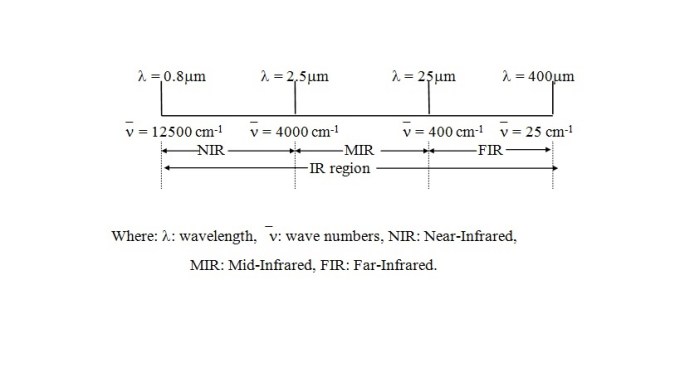
The NIR region is the one portion of IR region towards the visible wavelength region and ranges from 0.8mm (wave number: 12500cm-1) and goes up to 2.5 mm (wave number: 400cm-1). Near-Infrared (NIR) is the region of combination bands and overtones. Overtones are defined as simple multiples of the fundamental frequencies and occur as a consequence of anharmonicity that is deviation from simple harmonic motions because of interatomic forces and other factors within the molecule. Combination bands result when two fundamental frequencies interact and are influenced by the radiation of combined frequencies representing the fundamental frequencies. Due to presence of these frequencies hydrogenic atoms, being the lightest of all the atoms, vibrate within the NIR region, giving rise to absorptions such as N-H, O-H and C-H groups; commonly found in most food type products.

NIR spectroscopy can be used for determination of moisture, alcohol, oil, protein, fat, starch, amino acids, hydroxyl ion, film thickness, latex, total carbohydrates, nicotine, attributes like stability and internal damage etc. It can be successfully applied in the areas of baked foods, beverages, fruits, grains, dairy products, meats, flows, pharmaceuticals, paper, textiles, plastics, sugar, vegetable and petrochemicals etc. Near-Infrared region is being used extensively in the food industry for the estimation of protein and moisture in wheat (William and Norris, 1983) and to predict the total sugar content of a variety of fruit juices (Lanza and Li, 1984). Near-Infrared spectrometry (Eisen et al., 1984) is a rapid technique for estimating fat, protein and ash content of mice and other animal species from a single instrument scan. NIR spectroscopy is effective for determination of moisture, fat and protein content in the fish and other meats (Solid and Solberg, 1992; Osborne et al., 1993; Shimato et al., 2003) NIR analysis is used for the determination of cotton in polyester yarns (Blanco et al., 1994), and seed oil content and fatty acid composition in sunflower through the analysis of intact seeds, husked seeds, meal and oil (Vich, Velaso and Martinez, 1998).

In sugar industry the testing of sugarcane for pol, brix, sucrose content, invert and other common constituents have traditionally been done by a series of ICUMSA (International Commission for Uniform Methods of Sugar Analysis) and AOAC (Association of Official Agricultural Chemists) test methods. As many of these methods are time consuming, operator dependent and involve the use of hazardous reagents so Near-Infrared analysis has gained rapid acceptance as an alternative method. The various applications (Edye and Clarke, 1996) of NIR in sugar industry are analysis of raw sugar, refinery liquors, run-off syrups, remelts streams, molasses and low purity streams. Near Infrared analysis of shredded (Schaffler and Meyer, 1996) cane is being used as potential replacement for direct analysis of cane. NIR spectroscopy is used for determination of chemical composition (Brix, sugar content, purity) of molasses (Salgo, Nagy and Miko, 1998). NIR spectrophotometeric analysis is an alternative polarization method for raw sugar that uses NIR wavelengths (Player et al., 2000). NIR spectroscopic analysis has become increasingly important in the sugar industry, as the increased awareness for environmental and health topics makes desirable to avoid the clarification with lead acetate. As near infrared wavelengths specific to individual component can be identified, so it can be used for quantitative analysis of constituents of sugarcane.

References:

  1. Edye, L.A and Clarke, M.A. (1996). “Near Infrared Spectroscopy in sugar refining: Five years down the road”. Proc. Annual. Meeting. Sug. Ind. Tech., 55, 1-8.
  2. Eisen, E.J.; Bandy, T.R.; McClure, W.F and Horstgen-Schwark, G. (1984). “Estimating body composition in mice by Near Infrared Spectroscopy”. J. Animal Sci., 58 (5) 1181-1190.
  3. Lanza, E and Li, B.W. (1984). “Application of near Infrared spectroscopy for predicting the sugar content of fruit juices”, J. Food. Sci., 49, 995-998.
  4. Player, M. R.; Rowe, G. S.; Urquhart, R. M.; McCunnie, K.A and McCarthy, D. (2000). “Polarization of raw sugar without basic lead acetate: Int. Collaborative test”. Proc. 22nd Conf. Aust. Soc. Sug. Tech., 385-392.
  5. Salgo, A.; Nagy, J and Miko, E. (1998). “Application of near infrared spectroscopy in the sugar industry”. J. NIR. Spectrosc., 6, 101-106.
  6. Schaffler, K.J and Meyer, J.H. (1996). “Near Infrared analysis of shredded cane: A potential replacement for direct analysis of cane”, Proc. Sth. Afr. Sug. Tech. Assoc., 70 (5), 131-139.
  7. Solid, H and Solberg, C. (1992). “Salmon fat content estimation by Near-Infrared transmission spectroscopy”. J Food Sci., 57, 792-93.
  8. William, P.C and Norris, K.H. (1983). “Effect of mutual Interactions on the estimation of protein and moisture in wheat”, Am. Assoc. Cereal. Chem., 60 (3), 202-207.

ALANINE ON RATE OF CRYSTALLIZATION OF SUCROSE

By: Aamarpali Puri

 The sugar crystallization is the diffusion-controlled process followed by the deposition of sucrose molecules lattice on to the nuclei. The higher is the temperature, the more is the sugar that can be held in the solution. In sufficiently concentrated solution, there is formation of aggregates among the sucrose molecules. The sugar crystal grows only in a supersaturated solution with the degree of supersaturation defined as the ratio between the total solid content in a supersaturated solution to that in the saturated solution. As the solution enters the supersaturation zone, there is an even higher probability that these aggregates reach dimensions to originate a stable three-dimensional nucleus, which, increasing will form, the sucrose crystals. During crystallization of the sucrose from the mother liquor and it’s subsequent development to produce uniform size and shape of the crystal, there is need to monitor the degree of supersaturation. Supersaturation is an unstable state. In this state the sucrose molecules begin to crystallize back into a solid at the least provocation. Stirring or jostling of any kind can cause the sucrose to begin crystallizing. For achieving optimum crystal growth without forming any false grain, supersaturation has to be kept within the metastable zone (1.05<SS<1.25). An automatic laboratory vacuum pan (Kishihara and Fujii, 1994) was also developed. It was (Kishihara et al., 1993) reported that overall coefficient of the growth rate of sucrose crystals from the ultra filtrate of factory syrup is 1.2 fold greater than that from the original syrup. Sucrose solubility is highly influenced by the presence of both organic and inorganic compounds, which are normally present in the industrial solution. The effect of non-sugars on sucrose solubility depends on both their type and the concentration. The (Maurandii et al., 1982 and 1984; Vanhook, 1983) presence of the impurities in sugar solution has effect analogous to the one exerted by an increase of temperature: a concentration increase promotes an increase of the volume diffusion influence on the overall crystal growth process. Sucrose crystal growth (Guimaraes et al., 1995) rate is sensitive to the variation in the crystal size and slightly influenced by the surface integration, with the diffusion step in crystal growth a significant factor in determining the over all rates. Sucrose crystallization takes place by layer upon layer deposition at the crystal surface and is affected by the non-sugars present. Powers (Powers, 1970) study revealed that if structural affinity with a single face exists, or there is possibility of bond formation, the molecule of impurity could statistically remain on the surface for a period. The increase in the viscosity due to presence of the impurities affects the crystal movement in the bulk of massecuite. The non-sugars present affects the deposition of sugar at different sugar crystal faces and hence the sugar crystal’s growth and quality. All the polysaccharides (Kaur et al., 2004) increase the viscosity of sugar liquor and decrease the rate of sugar crystallization. The growth rate of sucrose crystals increases with the increase in the level of phosphate but decreases with the increase in the level of silica in sugar solution (Puri, A.R and S.Kaur., 2005).  The impurities that are added in the form of a dye tracer (methylene blue) and KCl show no effect on the growth rate.

To obtain sugar both from beet or cane, rather complex processing schemes are followed which depend on the quality and quantity of non-sucrose compounds present in the solutions at the end of the extraction stage. Till now no general applicable theory exists which predicts effects of all the factors that govern the process of crystallization from the solutions, accurately and completely. In the present investigation the growth rate of sugar crystals is studied as a function of supersaturation, temperature and the seed size. So the effect of alanine on growth rate of sucrose crystals is studied at two degrees of supersaturation, at two temperatures and at two different seed sizes of sucrose crystal.

The crystal growth rate depends on the viscosity, which further depend on the nature and amount of the impurities. Impurity gets attached to the sugar crystal by adsorption, occlusion or co-crystallization and influences the spin of the crystal in the solution. Hence, it is found to affect the final colour, shape and size of the crystal.

The sugar cane industry is a major user of nitrogen fertilizer and has an interest in efficient fertilization practice to limit costs and ensure a sensitive environment, which is not exposed to excessive N losses.  Amino acid (Chen, 1985) and amides are present in raw cane juice and molasses. Excessive urea application in fields without potassium and phosphate use is responsible for higher amino compounds in juices. The free Amino acids accumulate in molasses and contribute to sucrose loss when amino acids are linked together to form proteins. In sugar cane plant the total content of nitrogen ranges from 0.036 up to 0.05%. Cane juice contains nitrogenous bodies such as albuminoids, ammonia, amino acids (alanine and glycine) and amides varying from 0.5 to 1.0%. Amino acids are of importance as they along with other nitrogenous bodies reacts with reducing sugars and form colored compounds. In industry, so many efforts are done to remove color. Analyzing amino acids in a sample can help solving color problem in sugar to some extent.

Alanine is a non-essential amino acid and was first isolated in 1879. It is one of the 20 amino acids used to synthesize proteins in terrestrial living organisms. It is an inhibitory or calming neurotransmitter in brain. Alanine (Molecular formula C3H7NO2) is the major amino acid present in cane juice. As percentage dry solids, the alanine is 0.06% free and is 0.05% as protein. It is one of the 20 most common natural amino acids. It is hydrophobic, with a methyl group side chain, and is the second-smallest of the 20 after glycine. It is also known as 2-aminopropanoic acid. As shown (Fig .1), its alpha carbon atom is bonded to a carboxyl group (COO), an amino group (NH3+), a methyl group (CH3), and a hydrogen atom.

It exists as two distinct enantiomers, L-alanine and D-alanine, the former of which is used in protein synthesis. In the present study growth rate of sugar crystals in the presence of alanine has been studied.

Abbemat digital automatic refractometer was used for determining Brix. The rate of sugar crystallization was studied using two-litre laboratory vacuum pan.

Sucrose crystallization is a mass transfer process, sucrose molecules migration from solution, to crystal, driven by concentration differences between the mother liquor and the crystal surface. The rate of sugar crystallization was studied at two temperatures 328 and 338K in the laboratory vacuum pan in the presence of varying concentrations of alanine at the two seed sizes 850 μm and 600 μm  The increase in alanine content in the sugar solution decreases the growth rate of sugar crystals. The growth rate was found to increase both with the increase in the supersaturation and 100C rise in temperature. However, the increase was more significant with the increase in supersaturation then with 100C rise in temperature. It can be concluded that the presence of alanine impedes the growth of sucrose crystals.

 REFRENCES:

 Chen, C.P. (1985). “Cane Sugar Handbook 11th Edition”. A Wiley-Interscience publication. John Wiley & Sons, New York., 34-35.

 Honing, P. (1963). “Principals of Sugar Technology”. Vol II Elsevier Publishing Co. London.

 Kaur, S.; Kaler. R.S.S and Aamarpali.  (2004). “Effect of polysaccharides on rate of crystallization of sucrose”. Ind. Sug. July, 265-268.

 Kishihara, S.; Tamaki, H.; Wakiuchi, N and Fijis, S. (1993). “Effect of Ultra filtration of factory sugar solution on growth of sucrose crystals”. Int. Sug. J., 95, 1135, 273-276.

 Kishihara, S and Fuji, S. (1994). “Development of an automatic laboratory boiling pan”. Int. Sug. J. 96, 1151, 451-455.

Mathur, R.L. (1986b). “Handbook of cane sugar technology IInd Edition”. Oxford and IBH Publishing Co., India, 26.

Teacher Burn Out and Stress Management

By: Shaifali Rachna Puri and Sneh Lata

A teacher is an instrument that gives shape to the raw material provided to her/ him in the form of pupils. A teacher is the pivot around which the society and its functioning revolves. It is an accepted fact that it is in the hands of the teacher to give appropriate design to her students. A teacher can produce a friend as well as a foe of the society with the help of the guidance provided to the pupils. There are various facts concerning the teachers that can have a positive as well as negative impact on the personality of a teacher who has to play such an important role for the society. These factors cannot be avoided at any cost, rather should be treated with full attention. Major factors in this regard are Stress and Teacher Burnout.
Teacher’s Stress: Teacher stress is a much talked of phenomenon, however there is little consensus between different professional groups regarding its etiology, or how to tackle it. Based on a review of international research, it is concluded that teacher stress is a real phenomenon and that high levels are reliably associated with a range of causal factors, including those intrinsic to teaching, individual vulnerability and systemic influences.
Causes: There are unquestionably a number of causal factors in teacher stress. Although stress always involves a transaction between the individual and their environment, inability of the individual to adjust in the environment around etc. For general reference we can divide causal factors in teacher stress into three broad areas; factors intrinsic to teaching, cognitive factors affecting the individual vulnerability of teachers and systemic factors operating at the institutional and political level. The main causes of teacher stress are insecurity in job, overwork, less appreciation, over commitment to job and being under salaried. A factor related to workload is role overload, which takes place when an employee has to cope with a number of competing roles within their job. Classroom discipline is also a significant source of stress. An analysis in 1999 was made regarding teachers’ estimations of stress arising from being unable to discipline pupils in the way they would prefer. Overall, maintaining discipline emerged as a stressor, with those worst affected being teachers who placed particular emphasis on pupil empowerment. Changes in the work environment and a feeling of lack of control over work also are major causes of the unrelieved stress. Evaluation is a process that gives an estimate of the grasp of the learner but several times it becomes a source of stress and tension. When asked the student teachers, it was found that of all the sources of stress for student teachers, evaluation was the greatest, they were found to be most afraid of the discussion lessons, although this fear declined following teaching practice, suggesting that it is reduced by exposure and positive experiences of observation feedback. People with tendencies to place too-high expectations on themselves also may be more prone to stress. When carried too far, compulsiveness, perfectionism, and inflated self-confidence can have detrimental impacts on one’s professional and personal life. Setting unrealistic goals, thinking anything is possible with the right amount of work, and taking on more than one know one can handle will leave the person striving to maintain an intensity that simply cannot be sustained over time and will lead to stress.

Teacher Burn Out: When the body and mind are relentlessly strained, one is bound to develop emotional and physical fatigue. Burnout is a physical, mental, and emotional response to constant levels of high stress. Burnout produces feelings of hopelessness, powerlessness, cynicism, resentment and failure—as well as stagnation and reduced productivity. These stress reactions can result in levels of depression or unhappiness that eventually threatens one’s job, relationships and health. Burnout is associated with situations in which a person feels:
• Overworked
• Under appreciated
• Confused about expectations and priorities
• Concerned about job security
• Over committed with responsibilities
• Resentful about duties that are not commensurate with pay etc etc.
Burnout can occur when one feels that one is unable to meet constant demands, and becomes increasingly overwhelmed and depleted of energy. Debilitating sadness, anger or indifference can set in this situation. One begins to lose the interest or motivation that led one to take on a certain role in the first place. Burnout is not simply excessive stress. Rather, it is a complex human reaction to ongoing stress, and it relates to feeling that one’s inner resources are inadequate for managing the tasks and situations presented. The signs and symptoms of burnout are similar to those of stress, but burnout includes an emotional exhaustion and an increasingly negative attitude towards work and, perhaps, one’s life too.
Burnout has been found to proceed in stages that blend into one another so smoothly that one might not realize what is happening until one is in a state of despair and physical and emotional breakdown. One might begin a new job with boundless energy. Yet soon finds himself in a state of disillusionment and disappointment. One might feel confused and can’t quite put finger on what’s wrong. Feelings of frustration and irritability eventually give way to full-scale exhaustion and fatigue.
Some people experiencing burnout will feel as if their jobs are no longer interesting or enjoyable. They become indecisive, their productivity drops, and their work deteriorates. They may not even care about doing a good job and often perform tasks by rote. These people feel bored and put-upon, they may dread going to work in the morning, and they may feel envious of others who are happy with their work.
Effect: It leads to development of negative attitude towards life and work. It leads to loss of interest and motivation in working area. When stressed, body begins to show signs of psychological illness, headache, high blood pressure, stokes, heart attacks, fatigue and indigestion etc. In stress person is frustrated, powerless and detached from people and things around. Stress is very clearly seen to affect personal relation ships and leads to sadness and depression.
Since burnout is not an overnight occurrence, it’s important to recognize its early signs and to act before the problem becomes severe. In a chronic state of stress, the body will begin to show the following physical signs of stress overload:
• Psychosomatic illnesses (psychological/emotional problems which manifest themselves physically)
• Digestive problems
• Headaches
• High blood pressure
• Heart attacks
• Strokes
• Teeth grinding
• Fatigue
When one is on the verge of burnout, one may feel:
• Powerless
• Drained
• Like a candle burning at both ends
• Frustrated
• Detached from people and things around.
• Bored
• Resentment for having too much to do.
• Stuck in a situation from which one cannot extricate oneself.
• Unsure about choice of job or career.
• Withdrawn, isolated from coworkers and friends
• Insecure about own competence and abilities
• Cynical
• Irritable
• Anxious 

Stress Management: The aim of stress management is to help a person balance the various aspects of his life— work, relationships and leisure—and to balance the physical, intellectual and emotional aspects of life. People who effectively manage stress consider life a challenge rather than a series of irritations, and they feel they have control over their lives, even in the face of setbacks.
Stress can be managed if pin pointed at it’s on set. By this one gets control of the situation in which one gets stressed. Burn out builds up by and by and it is not overnight occurrence. Seeking doctor, having good diet, proper sleep and exercise, can prevent burnout. With self-suggestion, consulting therapist and time management one can avoid burn out. Person should know his or her mental and physical potential and choose carrier accordingly. By renewing body, spirit and mind one can enjoy a healthy and sustainable life. A person to avoid and prevent stress can adopt various methods:
1. Knowing what causes stress can help a person cope with it better and provide mental and emotional relief. There are many ways to plan for and avert stress. Recognizing one’s own specific triggers is one of the first steps in the process of stress management.
2. One may be experiencing stress because the life has become out of balance. One may be spending too much time and energy on work or on caring for others at the expense of one’s own health and well being.
3. One of the most effective things we can do when we are stressed is to talk from our heart to a friendly listener who remains calm and listens in a way that makes us feel understood. Studies show that people who are active socially are most capable of dealing with stressful situations and major illnesses.
4. A person’s attitude has a lot to do with whether events and occurrences produce a feeling of stress. Once we admit that we are not able to control everything, we will be better equipped to handle unexpected situations. Stress management comes down to finding ways to change our thinking and manage our expectations.
5. Taking care of body, mind and spirit can help reduce feelings of anxiety and frustration that often accompany stress. One might be surprised by how much stress relief a long bubble bath or a quick catnap will provide.
6. Try to take time everyday to slow down and do something enjoyable, even if it is just for a few minutes. Reading a magazine, playing with dog, reading child a book, or any other activity that helps forget the stresses of day.
7. Writing things down has a marvelous way of putting things in perspective. Putting one’s worries into words may help one see that one doesn’t really have that much to worry about, or it may help get organized and manage stress, rather than letting it manage oneself.

References:

1. Will J. G. Evers “Burnout among Teachers” Department of Psychology, The Open University, Heerlen, the Netherlands
2. Admiraal WF, Korthagen FAJ & Wubbels T (2000) “Effects of Student Teachers’ Coping Behaviour”. British Journal of Educational Psychology 70, 33-52.
3. Matt Jarvis Stress News 2002 Vol. No
4. Lanier, J.and J.Little. “ Research on Teacher Education.” in Handbook of Research on Teaching, Third Edition, edited by M.Wittrock.New York: Macmillan, 1986
5. “Burnout: Signs, Symptoms and Prevention”. Help guide- Mental Health Issue. An online Journal
6. “Coping with Stress: Management and Reduction Techniques”. Help guide- Mental Health Issue. An online Journal.

Importance of Coordination

By: Prapanna Lahiri

Coordination has been variously defined as stated below:

  1. Co-ordination is the unification, integration, synchronisation of the efforts of group members so as to provide unity of action in the pursuit of common goals.
  2. Coordination refers to integration of activities of individuals in a group, between multiple groups and/ or departments within an organisation aimed at achieving the objectives of the organisation formed by these units.  Coordination is often confused with cooperation. Co-ordination is an orderly arrangement of efforts to provide unity of action in fulfilment of common objective whereas co-operation denotes collective efforts of persons working in an organisation voluntarily for the achievement of a particular purpose. It is the willingness of individuals to help each other. Coordination can be enforced while cooperation comes from within.
  3. From the aforesaid definitions it is clear coordination applies to group activities and not to individual activities. Coordination does not come automatically and needs to be enforced to bring about unity of action.

Management experts have emphasised about the primacy of coordination in organisational theory:

1. “Coordination is the Essence of Management.” I.e. Coordination affects all the functions of management, viz., Planning, Organizing, Staffing, etc.

Management seeks to achieve co-ordination through its basic functions of planning, organising, staffing, directing and controlling. Thus, co-ordination is not a separate function of management since achieving harmony between individuals’ efforts towards achievement of the group goals is a key to success of management. Co-ordination is the essence of management and is implicit and inherent in all functions of management

2. Coordination is a function of management.

3. Coordination is a principle of management; more specifically coordination is the ‘Mother Principle,” in as much as all other principles are included in this one principle.

4. Coordination is the “Plus-value of the group,” says Mary Parker Follett, an American social worker and a pioneer on organisational behaviour. It means in a group sporting good coordination between its constituent individuals, the combined group achievement can be greater than the added value of the individual achievements. It substantively means 2+2 may add up to 5 in terms of activities of a well coordinated human group though physically it is impossible. The need for coordination may be listed under three fundamental categories:

Why Coordination is necessary:

The need for coordination may be listed under three fundamental categories:

  1. Division of labour
  2. Interdependence of individuals and functions.
  3. Integration of individual with organization

On the basis of above broad categories the need for coordination within an organisation may be further expanded under the following heads:

Specialisation:  The principal benefit of the principle of division of labour is specialisation. The first step towards ensuring specialisation is segregation of the organisation into different parts. Now, to gear all these parts into achieving a common organisational goal the segregated parts require coordination. Thus, Coordination is important for achieving job specialization.

Unity of Action: An organisation performs with diverse resources, both material and human. Coordination becomes important to fulfil intended organisational goals by reducing the diversity and restoring unity of action of these diverse resources, human skills, tasks and perceptions.

Optimum utilisation of resources: Coordination is important to consolidate the human and material resources of the organization. By minimising wastage and by streamlining usages of resources their optimum utilisation is ensured.

Quick achievement of objectives: Coordination is important to minimise conflicts, rivalries, wastages, delays and other organizational problems. The collective organisational goal is quickly achieved by removing the said hindrances.

Encouragement of team spirit: Coordination reduces conflicts between individuals and departments, between line and staff and between individual objectives and organisational objectives. This encourages working in a team and boosts team spirit.

Improved Intra organisational relationship: Coordination has an important role in promoting relationships between various levels of management and operatives, right from the Top Level to the Middle Level, to the Lower Level and finally to the workers and operatives, since each level coordinates the functions of level coming under it.

Facilitation of motivation: Coordination encourages individual initiative and freedom within an individual’s domain by removing friction and overlapping of responsibilities. It becomes easier to extend financial and non-financial incentives. This ensures job satisfaction and motivation to perform better.

Higher efficiency: As already stated coordination ensures optimum utilisation of material and human resources; it automatically results in savings on costs. Since efficiency is a measure of higher returns relative to costs incurred it can logically be concluded that coordination leads to higher efficiency. Moreover coordination enhances collective competence pooling together each individual employee’s knowledge in creating a knowledge pool. This is critical for survival of an organization in a competitive environment.

Interdependence: Although with division of labour an organisation operates by segregating its activities into different functional areas, the interdependence of every function finally helps in realising the organisational objectives. This interdependence and synchronisation is secured through coordination.

Balancing inequalities and restoring teamwork: Individual inequalities and differences cause imbalances in an organisation. Coordination irons out these imbalances and facilitates teamwork to achieve organisational goals.

Synergising differentiated work: As earlier explained success of an organisation is dependent on a scenario where combined effect of efforts becomes greater than the sum of their separate effects. Coordination helps in synergising differentiated work units to achieve the integrated effects. It is possible to achieve synergy through effective coordination as it helps in integration even in differentiation.

Integration of Individual and Organisational Goals: Individual needs decide Individual goals. It may not be coterminous with group or organisational goals. The need is to harmonise these goals to attain desired results. Coordination is the tool to accomplish this harmonisation.    

Modern day growing organisations feature an effective network of huge number of people working in unison. Coordination is the instrument that makes this possible. The points explained above amply illustrate the extent of importance that the principle of coordination has in the success of a robust organisation. Without coordination, it is difficult to achieve the desired goals. This is why Chester Barnard the noted American business executive and author opined “…the quality of coordination is the crucial factor in the survival of organization.”

Methods to Avoid Negative Impact of the Cinema on the Adolescents

By Shaifali Puri

It is an accepted truth all over the universe that whatever a person sees in practical shape leaves a permanent impression on the mind. The same law applies to the cinema. It is a media that always leaves a deep impact on the minds of the audience. This is true especially in case of the adolescents. The age of adolescence is the age when one is like wax, turn the way you want. When someone ponders over the question, as to what cinema is, the answers that readily come to mind are “An art form”, “A means of telling stories”, “A business”, “An entertainment” and possibly several other similar phrases but of course, these are not the real definitions of cinema. In fact these are the theories or the concepts that one develops while watching cinema. It is these pseudo definitions that nurture whole set of attitudes towards cinema and mask out important issues. If one looks at the general opinion about cinema, will find quite a different type of impression coming up. When one looks at often vague and pseudo-definitions of cinema one feel that the simple evocation of cinema arouses deeply personal resonance. But the cinema does not perform only this function. Apart from arousing feeling cinema also plays a very important role in day to day social as well as moral life of people. Cinema is such a subject, the study of which provides a peep into the life and atmosphere of the society in which it is produced. It is such a media that effects the changes in the life style of the society and is within the reach of all. Various ways and methods can be adopted to avoid the negative impact of the cinema on the personality of the adolescents. These methods are to be adopted at family as well as social level.

  • Students at all levels of education should be encouraged to watch educational or patriotic movies to ensure harmonious and positive development of personality.
  • Seminars, open discussions, lectures etc should be arranged where in positive and suggestive communication should take place among teachers, parents and children.
  • Mass media should be made responsible to carry out the job of ensuring production of reality based and morally suggestive programmes and movies.
  • A strict distinction should be made between the movies for young and for adult public. This kind of restriction should be strictly followed.
  • The stars and the artists should take initiative to propagate the fact that what ever is shown on silver screen should be watched only with the point of view of entertainment. It should not be imbibed in real life.
  • Print media can be used as a powerful source of propagating the abstract nature of silver screen. It should try to put positive influence on the minds of children by laying bare the truths of cinematic life.
  • Sex education should be provided to children to prevent them from developing wrong notions about sex, under the influence of movies and other programmes.
  • There should be proper and regular interaction between teachers and parents in order to discuss the changes taking place in the personality of child.
  • The ministry of education should establish a strong control on the conduct of cinema. The producers should be asked to maintain moral conduct in the movies they produce.
  • There should be TV. shows where in the realities behind all that is depicted on screen, should be shown so that the children do not look at it as a dreamland and do not blindly follow it.

Dr APJ Abdul Kalam

Dear Readers/Friends/Well wishers,

Our loving teacher and visionary, one of the rare personalities former President of India Dr. APJ Abdul Kalam left us forever for his final journey. He suffered a massive heart arrest and collapsed while delivering lecture at IIM Shillong on 27th July 2015. Dr APJ Abdul Kalam served as the 11th President of India from 2002-2007. With his immense contribution at the Indian Space Research Organization (ISRO) he became popular as missile man.  He handled Project Devil, Project Valliant and launch of Rohini-1 and many more. He was a great scientist, a great visionary and a great thinker.

He will always be with us in our hearts.

May his soul rest in peace.

Stress: Relation with Performance, Causes and Ways of Overcoming

By Anamitra Roy

Relationship between stress and performance:

Stress (meaning as per Oxford Dictionary: pressure or tension, physical or mental strain) is generally believed to be a performance reducing agent. When a person undergoes stress, he/ she cannot perform up to the mark. Stress pulls a person back. Very often we become prey of stress. It is a state when a person gets perturbed by some external/ internal agent or phenomenon. The relation between performance and stress is believed to be inversely proportional. When stress goes up, performance goes down. Similarly, when stress comes down, performance goes higher.

But there are some exceptional situations. In some cases it is observed that during stress a performer’s performance graph goes higher. It is believed by many management experts that stress can also be a great motivator. It can act as a performance booster, as a catalyst. Here we can cite an example from the world of sports. At times it is seen there are some sports personalities who perform better when they are under severe pressure. This is because such personalities are great handlers of stress. Steve Waugh, one of the longest and most successful captains of the Australian cricket team is a typical example of such a type of a personality. His performance graph always used to go higher whenever he was under pressure and stress. This was an example when stress was acting as a motivating agent.

Many experts are of the opinion that during stress the options slowly get reduced. So it becomes easy to handle the fewer options and focus. That is why; it is a common practice among employers around the world to keep their employees under stress. However, in this context, it has to be said that the employers need to be careful in trying to motivate their employees by putting them under stress. This is so because too much application of stress creating agents may also reduce the productivity of the employees in the long run.

Thus, it can be concluded that the relationship between stress and performance is inversely proportional but it can also be made directly proportional. However, the natural belief is that these two are inversely proportional … always.

Common stressors that one experiences in an organization:

Stressors are persons or happenings that cause or increase the volume and the intensity of stress. A list of stressors that one commonly experiences in an organization, are as follows:

Work load:

When the volume of the work increases to an unmanageable level, then work seems like a load. This causes stress.

Job conditions:

When job conditions i.e. work environment, social recognition etc. changes or degrades then stress is caused.

Role Conflict:

When there is a role conflict in the job profile, then also stress is caused. Reasons of role conflict are lack of understanding of the job profile, lack of understanding of the circumstances prevailing around in the workplace etc.

Career Development:

When career development plans of an individual are not satisfied then stress becomes very common. This stress arises from frustration, dissatisfaction and depression, thereby giving rise to job dissatisfaction and insecurities.

Conflict between work and life:

The question of ethics is very important in development of stress. At times it is seen that an individual has to do a lot of things at work which he spiritually does not believe in. Sometimes the employees are forced to adopt certain unethical means to get the job done. This causes heavy stress in minds that do not accept these unethical means.

Work place aggression:

Workplace aggression (for example aggression showed for achieving targets) in today’s world is one of the most important factors that gives birth to stress. There was a time when this word “aggression” was used as a positive trait. But not in today’s world. Most modern day HR management experts treat aggression as a severe negative trait. This is so because it can help you to achieve your target but at the cost of putting other employees in the organization go through stress. Instead they believe that “assertiveness” can be treated as a quality.

It is due to this factor of aggression that a lot of people lose their job even. The growing rate of heart ailments, hypertension, memory and sleep disorders are results of workplace aggression causing stress.

Apart from this, under no circumstances can we forget the influence of personal lives in causing stress. Disturbances from home are at times brought in the workplace. Marital problems, fights with partners and children back at home, personal financial problems are common examples of stress boosting factors that grow from the domestic front but can ruin both the personal and professional fronts. In such situations it is better to get on with the “switch on and off” techniques. When you are managing the domestic front, just practice to switch off the worries and anxieties of the professional front and vice versa. However, it is easier said than done. It can be done by learning to forgive. A person undergoing stress from both the personal and professional fronts needs to understand that he is a normal human being and it is very much human to commit mistakes. He has to learn to forgive himself. It is only when you learn to forgive yourself, then you can practice the art of forgiving others and sometimes for severe stupidities that they have depicted. The art of forgiving yourself will enable you to reduce stress and practice “switch on and off” techniques.Remember for every negligence, for every criminality, for every stupidity, there is a forgiveness waiting for you, however, miniscule the intensity of that forgiveness may be.

You may have forgotten to get your personal pass books updated, you may have forgotten to deliver on a promise that you made to your wife/ partner, and you may have forgotten to submit the project report to your greedy boss before coming out of the office this evening. So what, there is always a second time and you can do it perfectly at the second go.

Measures that an individual and an organization can take to manage stress:

Handling stress and managing stress in the current era is one of the most challenging tasks for an organization as well as an individual. In this context, it has to be considered that stress can be managed or reduced, but never eliminated. That’s why, you hear terms like stress management techniques, methods, programs etc. You will never come across terms like stress eliminating techniques, methods/ programs etc.

An organization can take up the following measures to handle stress i.e. keep it as much suppressed as follows:

Job redesigning:

Generally it is seen that in most organizations, employees suffer from stress because the job does not suit them or they don’t suit the job. It is a question of a right man for the right job. In this case, if the HR department does a redesigning of the jobs in such a manner so that it suits the employees, then the stress level will automatically come down and the employees will be benefitted as their productivity will increase.

Goal setting:

If the goal setting is done in such a way that employee finds it relatively easier or at least in line of their interest then the stress levels will come down considerably.

Role negotiation:

When the role of an employee is clear to him or her, then it becomes easier for that employee to focus and perform, thereby reducing stress. This can be done through proper role negotiation.

Workshops:

A lot of corporate today arrange for yoga and stress releasing workshops. The employees are taught in these workshops to handle stress, control stress and minimize stress.

In case of an individual, the following measures can be taken up to manage stress:

Optimism:

One should practice to look at the world with optimism … it is to be believed that if winter comes, can spring be far behind. This will reduce the negative energy and induct hope, which in turn will help to reduce stress. After all it is rightly said that no one ever injured his eye sight by looking at the brighter side of life.

Time management:

One of the common causes of stress is not being able to achieve the targets within the stipulated time frame. Acquisition of better time management skills will enable us to manage the time better, utilize the resources optimally, reduce wastages, achieve desired results and thereby reduce stress.

This can be done by preparation of a job list after reaching the office in the morning and prioritizing the jobs to be done on that very day.

Hobbies:

To reduce stress, one has to spent time with oneself i.e. give time to himself or herself. In order to do this a hobby should be developed. I keep on hearing from people around me that they have absolutely no time to donate to themselves. I ask them, “Are you sure?” Personally I do not believe that you cannot have at least 30 minutes a week for yourself. Even the busiest of the personalities in this world like President Obama, Prime Minister Modi, Ratan Tata, Bill Gates and many others have at least 30 minutes a week for themselves, for family, for recreation. Have you ever given a thought to this that if man never had any time for hobbies and recreational activities then why were these two words included in the English dictionary or for that matter, from where these two words came?

If this is the case with your life that you do not have any time for yourself then it is not an example of a very hectic life. Unfortunately, your life has become an example of a life in which there is probably no time management.

Manage your time, prioritize your jobs, stop procrastination (or should I say in the words of Brian Tracy, “Eat that Frog”) and get going. You will have enough time for music, movies, politics, theatre, philately, numismatics, research and many other hobbies that can give you a lot of good times.

Exercise:

Physical exercise burns out the extra calories and releases oxytocin that make you feel happier. It increases the capacity of the mind to stay with problems longer. This increases the stress handling capacity of the body greatly.

Diet:

Maintenance of a proper diet i.e. avoiding of spicy food keeps the mind relaxed. Your metabolism rates will be higher. World famous management expert, BryanttMcgill has designed stress management programs which consist of recipes of non-spicy foods. Moreover, avoiding junk food which is rich in salt content will keep your blood pressure level under control. Thus, stress can be reduced.

Counseling by professionals:

Stress is very common in the present age. Despite best efforts at times stress cannot be checked. In such a case, it will be better to take professional help. Counseling by professionals can be immensely beneficial.

Sharing problems:

Many a time stress is created in the mind because there is no vent or crater. Sharing the unhappiness and problems with others can help to release the stress through these craters. Start developing friends. Interact more with family. You will soon have a lot of people around you who will be interested to listen to you.

In this context, let me share a personal experience. I am in my early thirties and I have so far worked with 6 employers in my professional life. With some employers I have worked for as long as five years and with some I have worked for as long as less than one month. Whenever I tried to analyze my stint with my employers, shockingly I discovered that stress played a very important role in deciding if I should carry or not. It was not the nature of the work, work environment, job satisfaction, job enlargement or job enrichment that decided if I should carry on or not.

I have spoken to a wide range of HR executives from around the world. I discovered that almost all of them were of the opinion that stress was the deciding factor for HR reshuffling.

In today’s world with the growth in business complexities, stress can be a serious issue when it is pulling you back. Therefore we all should adapt to it and learn how to react to it.


“It’s not stress that kills us, it is our reaction to it.”

Hans Selye
Influence of Impurities in Sugar Technology.

By Aamarpali Puri

Starch and Dextran

Starch is a natural constituent of sugarcane. Starch gets gelatinized by heating during juice clarification and is removed to an extent of 30-35 % but the rest gets concentrated in the process stream due to evaporation of the clear juice. The resulting harmful effects of it are the increase in viscosity and poor juice filterability. Mechanical harvesting has resulted in an increase in the quantity of bacterial polysaccharides like soluble dextran in the juice. Dextran that enters the juice remains with it until crystallization of the sugar. Dextran formation causes sugar loss, processing problems and increases the viscosity manifold. This increase in the viscosity decreases the clarification rate and gives poor clarification, which in turn leads to crystal elongation and hinders the heat transfer process. It has been reported that dextran hinders the crystallization process by a temporary adsorption on especially the glucose fructose portion of the molecule.

Phosphate
Phosphate is natural constituent of sugarcane. In sugarcane the leaves with high phosphorous levels have more photosynthetic activity than those low in phosphorous. Shoot and root development benefits much from this element. Phosphorous deficiency causes shortening and thinning of stalks which, taper at growing point. Root system is retarded, there being very limited secondary roots. It has significant effect on the rheological characteristics of final molasses. It exhibits functional properties in a wide variety of foods produced by all segments of the processed food industry. Phosphate [Potassium dihydrogen phosphate, (KH2PO4)] is present in the form of soluble phosphate in sugar cane. Phosphate may absorb or complex with proteins and starches by virtue of their high charge. The charge and the extension of protein are altered, thereby affecting its colloidal properties. Phosphates can, therefore act to modify the processing characteristics or stability of proteins. Presence of phosphate in cane juice is essential for good clarification. If present in optimum concentration, it has beneficial effect on crystallization of sugar. It tends to form heavy precipitate of tricalcium phosphate, which not only removes the colloidal and other impurities but also absorbs much of the coloring matter and diminishes the calcium content of the clear juice.

Silica
 Cane juice is probably saturated with respect to silica. In cane juice the presence of silica creates industrial problems by the formation of scales during sugar crystallization due to silica deposition as calcium silicates (CaSiO3). Scales are hard deposits, which stick very firmly to the inner surface of the boiler. Scales are so hard and adherent that it is difficult to remove them, even with the help of hammer and chisel. There in lies the need to determine the concentration of silica in cane juice.

Alanine and Glycine

Amino acids are of importance as they along with other nitrogenous bodies reacts with reducing sugars and form colored compounds. Also it is found from the static (Wei-Jun and Wu-Chang, 1992) and dynamic analysis that different colorants such as caramel, an iron-phenolic body complex, and the browning reaction products from reducing sugars and amino acids, have different affinities for the crystals and cause different coloration under the same conditions. In industry, so many efforts are done to remove color. Analyzing amino acids in a sample can help solving color problem in sugar to some extent. Alanine and glycine are amino acids commonly found in sugarcane. Alanine is a non-essential amino acid and was first isolated in 1879. It is one of the 20 amino acids used to synthesize proteins in terrestrial living organisms. It is an inhibitory or calming  neurotransmitter in brain. Alanine (Molecular formula C3H7NO2) is the major amino acid present in cane juice. As percentage dry solids, the alanine is 0.06% free and is 0.05% as protein. It is hydrophobic, with a methyl group side chain, and is the second-smallest of the 20 after glycine. It is also known as 2-aminopropanoic acid. Its alpha carbon atom is bonded to a carboxyl group (COO-), an amino group (NH3+), a methyl group (CH3), and a hydrogen atom. It exists as two distinct enantiomers, L-alanine and D-alanine, the former of which is used in protein synthesis. Glycine (Molecular formula C2H5NO2) which is the other major amino acid present in cane juice is polar, uncharged, neutral and genetically coded amino acid. It is the only protein forming amino acid without a center of chirality. Its alpha carbon atom is bonded to a carboxyl group (COO-), an amino group (NH3+) and two hydrogen atoms. As percentage dry solids, the glycine is 0.01% free and 0.04% as protein in cane juice.

Oxalic acid

Oxalic acid and oxalates are mild nephrotoxic acids that are abundantly present in many plants. It is one of the major acids present in cane. The high oxalic acid content is an effective browning inhibitor in cane. More over it binds vital nutrients such as calcium, so long-term consumption of foods high in oxalic acid can lead to nutrient deficiencies. So in the present study the effect of oxalic acid on the growth rate of sucrose crystals at two degrees of supersaturation, at two temperatures and at two different seed sizes of sucrose crystal has been studied. Till now no general applicable theory exists which predicts effects of all the factors that govern the process of crystallization from the solutions, accurately and completely.

Sulphur
Sulfur is a contaminant, which enters sugar during refining. Most sugar mills go through a process of sulfitation during the refining process, and the exact quantity of carry over of sulfur during the post sulfitation stages is not well known. But sulfur dioxide through bisulfite formation can form additives complexing with the aldehyde and ketonic groups of the hydrolyzed sugar moieties. Sulfur in foodstuffs is found linked to colon rectal cancer. Sulfur is believed to destroy Vitamin A, as it promotes the oxidation of the conjugated double bonds, and is also known to destroy Vitamin B1. Sulfur and sulfur dioxide are also known to promote allergies and accelerate the onset of allergy attacks.

Effects of rap and hip-hop lyrics on teen language / behaviour

By : Prapanna Lahiri

Oxford Advanced Learner’s Dictionary defines Rap as “a type of popular music with a fast strong rhythm and words which are spoken fast, not sung.” It is kind of chanting of rhyming speech or poetry combined to musical beat. Such improvisational poetry sounds catchy and is something one can dance to. Rap and hip hop are two of the most popular genres – or styles – of music. The hip hop subculture grew first among the African American and Latino American communities. Initially focussing on issues that were not receiving regular media attention the subject matter later ranged from local events to relationships. Hip hop music is meant to express hope for the future and to remember the successes of the past. Rap artists are predominately men while hip hop music is a mixture of men and woman. The American rapper and hip-hop philosopher KRS One distinguished the two terms stating that rap is something that is done, while hip-hop is something that is lived.

These two genres have had enormous impact on mass media and modern western culture in as much as they influence everything from commercials to politics. There are mixed effects when one turns to the effects of hip hop/ rap Music on the younger generation of today. While some rap and hip-hop music and the artists can stand for good influences on the youth promoting self expression, this genre of music also can have some extremely negative impact on the attitudes and behaviours of the young. With the rising popularity of rap music, teens have been turning to music to help solve their problems. But sadly, this style of music instead of being helpful has proved to be very destructive. The effects of these lyrics on adolescent language and behaviour have been huge, influencing and damaging the minds of children, teens and young adults, making them more violent and aggressive. More and more students in America are being arrested and taken to juvenile detention centres due to fighting or bringing weapons to school.

The provocative lyrics began promoting violence, money, drugs, alcohol, sex and degrading women. The influence of such lyrics is inappropriate for children since they tend to mimic what they see and hear. This is undesirable as the society does not want them to mimic the rappers. The future generation needs to be shielded from the inappropriate impact of rap and hip hop music of today.

References:

http://www.wisegeek.com/

http://www.ebony.com/entertainment-culture/the-difference-between-rap-hip-hop-798#ixzz3gJQvaAOH

http://www.studymode.com/

https://prezi.com

http://eng02-kat.blogspot.in/2011/12/effects-of-rap-and-hip-hop-lyrics-on.html

5 Steps to Develop Reading Habits:

By: Anamitra Roy

“The whole world opened to me when I learned to read.”

Mary Mcleod Bethune

Reading is considered as one of the most popular habits in the world. But at the same time it is also considered as one of the most unpopular habits. This is so because if you are born with this habit then you have received one of the nicest gifts ever. But if you were not and are trying to grow it within you then you may have a tough time.

Here are some simple steps to develop reading habits:

  1. Get Ready:

Henry Ford once said that getting ready is the key to success. So you need to get ready before you start with a new habit. You have to create the situation around you that will help to inculcate the habit. Do not expect too much out of yourself. Just think of creating the situation that will push you towards this habit.

  1. Surround yourself with books and book lovers … a situation for inculcating a reading habit:

Almost always when you meet a doctor and complain to him about sleep disorders, you will see that the doctor is asking you to not watch violent movies or read thrillers before you go to sleep. Like any other machine, the brain also needs time to shut down. Similarly, the brain also needs time to prepare itself to accept a new habit. So first of all, surround yourself with books and book lovers. You will see that you are getting ready to accept reading as a habit by doing so. This is the first step of preparing your mind to develop the habit of reading.

  1. Eat that Frog:

Now that you have a lot of books and readable, you have surrounded yourself with book lovers and readers, this is the best time to start with reading. But it surely is not an easy task. Remember, nothing in this world is actually easy. So you are up with a challenge that others are also facing but of course, may be in other spheres of life. Stop procrastinating and get going with the books and readable around you. For trying to stop procrastination just do what makes you go cold in your feet i.e. in the language of world famous management expert, Brian Tracy, trying to eat that frog. Brian Tracy almost always says that eating that dirty frog is almost equal to doing something that you hate. If you hate reading, you have to eat that frog i.e. you have to start reading.

  1. Demarcate the target into small fragments:

Sourav Gannguly, one of the batting maestros of the Indian cricket team scored a century in his first test match at the historic Lord’s. In an interview he said that he was actually not eyeing the century. Instead he was concentrating on reaching small targets of ten runs. Once he reached the first ten runs, he was again developing a target of scoring another ten runs. While developing reading habit, it is advisable to follow the same principle. Break the target into fragments. You do not need to finish the book at once. The book is meant to be enjoyed. So read a few pages. Come out of it. Then again read a few more pages. Give time to yourself. Just like a good quality wine can be enjoyed through small sips, similarly a book can also be enjoyed in installments. It is advisable to have patience while reading a book. The rule is simple. You do not need to finish it at once. Take your time. Enjoy it slowly, gradually but surely. Breaking the target into fragments helps you to stop procrastinating. Remember you do not need to climb the mountain by jumping at the peak. A thousand small steps and you are there at the peak. Similarly, one page at a time and may be that you have finished reading one of the bulkiest books around.

  1. Remember the Advantages of Reading:

When you read a book, try to take small pauses in between. During such pauses think about what the writer is saying. Think. Think and absorb. Try to implement in your life what the writer is saying. If you find positive results in your life after such implementations, then you will enjoy reading the book even more. This is a very easy way to motivate you to develop a reading habit. Secondly, remember that all of us have only and only one life. We take birth once, we live once and we die once. But a reader’s life is different. A reader lives many lives while reading. I can promise you that you will reach 20,000 leagues under the sea when you are in the company of Jules Verne. You will cry for the happy prince when you are going through Oscar Wilde’s creation. You will find it impossible to stop laughing at Uncle Podger when you are with Jerome K. Jerome. Try to identify yourself with what is written in those pages.

A book is not only a source of information. It is a friend, a source of joy, a companion, a guide, a partner, a developer of knowledge and a giver of a new lease of life to you. Keep the game very simple. Do not expect too much from yourself. It is fine that you were not a voracious reader. That does not make you less successful or less popular. You have a great life. But if you want to make it better, you can start reading. You can start right now.

Happy Reading