ROLE OF ELECTRONICS IN SUGAR TECHNOLOGY

By Aamarpali and Sneh Lata

Abstract:

Using Near Infrared Spectrophotometer of Elico (India) in the spectral range of 600-2500nm, online method of estimation of various impurities (polysaccharides, inorganic compounds and amino acids) in cane juice has been developed. Standard error of calibration and standard error of prediction was evaluated for each impurity using Partial Least Square Regression Analysis and Multi Linear Regression Analysis. Multi Linear Regression Analysis was also done and the wavelengths were identified at which the absorbance correlated well with the concentrations of particular impurity. Brookfield (HBDV-III) programmable Rheometer with small sample adapter that was double walled system of sample volume 8ml was used to study the effect of these impurities (polysaccharides, inorganic compounds and amino acids) at different temperatures (313, 318, 323, 328 and 333 K) on the rheology of final cane molasses.

Key words: near infrared spectrophotometer, rheometer, calibration, transmittance, molasses

Introduction:

The scientists are able to give their best research and that to in time is due to the usage of electronic equipment in their research laboratories. An electronic laboratory is always first choice of any researcher because the results are derived in shortest time span, there is no doubt about the result if instrument is properly calibrated, wastage of chemicals is less and apart from this the samples which can’t be kept for long time are analyzed best. Physical properties of substances are exactly measured by electronic equipment rather then glass made objects.

In the present manuscript the use of various electronic equipment is given for research work done in sugar technology. The research given here was impossible without electronic equipment In sugar industry the testing of sugarcane for pol, brix, sucrose content, invert and other common constituents have traditionally been done by a series of ICUMSA (International Commission for Uniform Methods of Sugar Analysis) and AOAC (Association of Official Agricultural Chemists) test methods. As many of these methods are time consuming, operator dependent and involve the use of hazardous reagents so Near-Infrared analysis has gained rapid acceptance as an alternative method. The various applications (Edye and Clarke, 1996) of NIR in sugar industry are analysis of raw sugar, refinery liquors, run-off syrups, remelt streams, molasses and low purity streams. Near Infrared analysis of shredded (Schaffler and Meyer, 1996) cane is being used as potential replacement for direct analysis of cane. The increased demand for quality sugar at low cost is the main objective behind doing research in this field. Sugar cane juice, which is main source of sugar, can’t be kept for long time. It gets decayed with time and temperature. It develops various microorganisms if preserved at high or low temperatures. To move forward and to get some important clues, the decision was taken to study sugarcane impurities (polysaccharides, inorganic compounds and amino acids). These impurities are natural constituent of cane juice. Starch gets gelatinized by heating during juice clarification and is removed to an extent of 30-35 % but the rest gets concentrated in the process stream due to evaporation of the clear juice. The resulting harmful effects of it are the increase in viscosity and poor juice filterability. Mechanical harvesting has resulted in an increase in the quantity of bacterial polysaccharides like soluble dextran in the juice (Cuddihy and Donal, 1999). Dextran that enters the juice remains with it until crystallization of the sugar. Dextran formation causes sugar loss (Donal, 1994), processing problems (James and Cameron, 1971) and increases the viscosity manifold (Sikdar and Ore, 1979). Presence of phosphate in optimum concentration in cane juice is essential for good clarification and has beneficial effect on sugar crystallization. The (Mathur, 1986a) optimum requirement of P2O5 is 300-500mg per liter of juice in the form of soluble phosphate. When the phosphate content in the clear juice is less, the deficiency should be made up by the addition of P2O5 the form of soluble phosphate before clarification. Silica, during crystallization creates problem by forming calcium silicate scales in the inner surface of the boilers, which are too hard to be removed. So the removal of these deposits by mechanical and chemical means is a time consuming and costly experience. The main amino acids found in cane juice are alanine and glycine. Cane juice (Mathur, 1986b) contains nitrogenous bodies such as albuminoids, ammonia, amino acids (alanine and glycine) and amides varying from 0.5 to 1.0%. Amino acids are of importance as they along with other nitrogenous bodies react with reducing sugars and form colored compounds. So therein lays the need to study these impurities in sugarcane individually. In present study impurities are estimated in cane juice with the help of Near-Infrared (NIR) spectrophotometer. NIR spectroscopic technique is environment friendly as it avoids the usage of lead sub-acetate for clarification of cane juice. The individual effect of these impurities on the rheology of final molasses is also studied. Equipment by equipment role in sugar research is given below.

Near Infrared Spectrophotmeter:

Near-Infrared spectrophotometer of Elico (India): Spectral range 600-2500 nm, bandwidth 10 nm, accuracy +0.5 nm, repeatability + 0.2 nm and with advanced state of the art MS Windows® based software for data acquisition was used. In NIR spectroscopy, a spectrum is run over the Near-Infrared wavelength range (800-2500 nm), in a manner analogous to the spectrum run in the visible range in UV- visible spectrophotometers. In this NIR spectrophotometer processing, storage, retrieval and interpretation of complex spectra can be done. This spectrophotometer helps in quantitative estimation of impurities in cane juice using regression analysis. The instrumental set up is shown in the Fig.1. It is PC based user friendly and menu driven. It is having high performance concave grating monochromator and two color detector.

The basic principle of this instrument is, that Near-Infrared radiation when incident on a sample gets transmitted. In transmission mode, the incident radiations get transmitted through the sample with diminished energy. The amount of transmitted energy from the sample is a measure of concentration of the constituent molecules in the sample. A series of standards of known concentration is used to develop concentration absorption correlation, using regression technique. The concentration of the constituent molecule in the sample is determined based on the correlation.

In contrast to conventional methods it require no hazardous chemicals. The striking features of the Near-Infrared technology are as follows:

-Designed for all cane and beet juice, syrups and molasses;

-It is environment friendly since no chemical reagents are used for the tests.

– Easy to use, thus permitting analysis of clear to turbid liquids without clarification or filtration;

-Frequency of response is online and continuous;

-Single and multiple-constituents analysis possible.

One more advantage of using NIR technology is that it has no consumables and operational costs are low, after purchasing the information technology equipment and the package there are no other costs involved. However, in case of conventional laboratories costly consumables are used and thus the operational costs are high. In this method firstly initial concentration of particular impurity is determined in cane juice. As the accuracy of NIR analysis is wholly dependent on the quality of calibration set so utmost care was taken in gathering, selecting and preparing samples to be used for calibration. While collecting samples it was taken into consideration that the samples should cover wide range of constituent’s concentration. The cane juice samples undergo chemical and biological (microbial) degradation with time. So the samples were analyzed on the same day without any delay. Calibration models were prepared for impurities. using PLSR. Separate prediction files were also prepared. In NIR estimation the prediction value is obtained from software, which gives required value by comparing with the calibration file chosen. The SEC is found to be negligible for all impurities thus indicating the correctness of models set up for them.

Brookfield Rheometer:

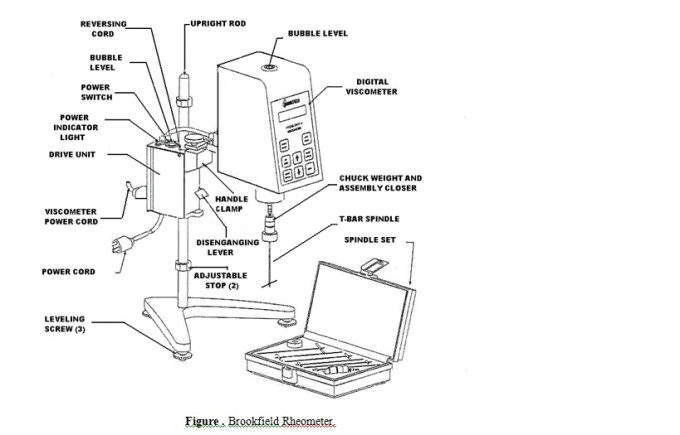
The rheology of final molasses was studied using Brookfield (HBDV-III) programmable Rheometer with small sample adapter, which was double walled system of sample volume 8ml. The spindle of spindle code SC4-21/13R was used. Brookfield refrigerated temperature bath model TC 500 was used to maintain uniform and constant temperature. The water at a given temperature was circulated in water jacket.

The final molasses samples of local mill were firstly defoamed. In the final molasses sample the initial concentration of different impurities were determined. The brix and purity of final molasses samples were also noted. For each sample rheological characteristics (shear stress, shear rate and apparent viscosity) were recorded directly from the instrument at the temperatures 313, 318, 323, 328 and 333 K. The measurement was carried out at these five temperatures in the increasing order of concentration of impurity for all samples. The rpm was so selected that the torque maintained within 10-90 %. The shear stress and shear rate data obtained during experimentation was fitted to the Power law model (Heldman and Singh, 1981). This revealed the flow behaviour of molasses in the presence of various impurities. The consistency of final molasses increased with the increase in phosphate concentration but decreased with increase in alanine and glycine concentrations. With the increase in concentration of silica in final molasses up to 20 ppm the consistency increased prominently but as the concentration of silica was further increased steep fall in the consistency of final molasses was observed. However with increase in temperature the consistency decreased with increase in concentration of phosphate, silica, alanine and glycine in final molasses. The final molasses behavior was found to be non-Newtonian at low temperature in all the five samples analyzed for phosphate however pure molasses sample at high temperature showed Newtonian behavior.

For final molasses samples containing added silica the behavior was non-Newtonian in sample having 0 and 10 ppm silica (at all the five temperatures), Newtonian in molasses sample having 20 ppm silica (at 328 and 333 K) and again non Newtonian in final molasses sample having 30 and 40 ppm silica (at 313, 328 and 333 K).

For final molasses samples having added alanine the molasses was found to be non-Newtonian at low temperatures but with increase in concentration of alanine in molasses samples, at higher temperature the flow behavior was shifted to Newtonian. Also for final molasses samples containing glycine the behavior was found to be non-Newtonian at low temperature but shifted to Newtonian with rise in glycine concentration in final molasses at higher temperatures.

The Arrhenius equation is used to describe the influence of temperature on consistency index (µ). The energy of activation was calculated for pure final molasses samples and for samples having added impurities. The energy of activation was found to decrease with increase in concentration of phosphate in final molasses and increase with increase in concentrations of silica, alanine and glycine in final molasses.

With this I limit my manuscript that relates electronics and sugar technology research.

ACKNOWLEDGEMENT: Author Dr. Aamarpali Ratna Puri is very thankful to Guru Nanak Dev University, Amritsar for providing necessary instruments and infrastructure for the present research.

REFERENCES:

Cuddihy, J. A. and Donal, F.D., 1999. Process and financial impact of Dextran on a sugar factory. Sugar Journal 3: 27-50.

Donal, F.D., 1994. Dextran induced sugar loss to molasses. J of ASSCT 1: 53-57.

Edye, L.A and Clarke, M.A. (1996). “Near Infrared Spectroscopy in sugar refining: Five years down the road”. Proc. Annual. Meeting. Sug. Ind. Tech., 55, 1-8.

Heldman, D.R and Singh, R.P. (1981). “ Food Process Engineering, the AVI Publishing Co

Inc, West Port.

James, G. P. and Cameron, J .M., 1971. The influence of deteriorated cane on raw sugar filterabilityProceedings of the Queensland Soc. Of Sugarcane Technologists 38th Conf Wattson Ferguson & Co., Bribane, Queensland, Australia 247-250.

Mathur, R.L. (1986a). “Handbook of cane sugar technology”. IInd Edition, Oxford and IBH Publishing Co., India, 98.

Mathur, R.L. (1986b). “Handbook of cane sugar technology IInd Edition”. Oxford and IBH Publishing Co., India, 26.

Schaffler, K.J and Meyer, J.H. (1996). “Near Infrared analysis of shredded cane: A potential replacement for direct analysis of cane”, Proc. Sth. Afr. Sug. Tech. Assoc., 70 (5), 131-139.

Sikdar, S. K., and Ore, F., 1979. Viscosity measurement of non-Newtonian slurry suspension using rotating viscometer, I and EC Process Design and Dev. 18, 772.

12 Teachings that you will be taught in a B – School other than those in the syllabus

By: Anamitra Roy

Time spent in a B – School is one of the most fascinating experiences that one can have. A B – School teaches you about business. But apart from business it also teaches you a few more things which first breaks you and then reshapes and remodels you. A discussion on 12 such teachings that are not included in the syllabus but are taught in a B – School, are as follows:

  1. How to get going with people from different nationalities, ethnic and religious backgrounds
A  B – School always is a conglomeration of people from different nationalities, ethnic and social backgrounds.  During our years of growing up we are often taught by the environment around us to hate people from a particular nationality, ethnic or religious background. But in a B- School those beliefs and lessons are bound to take a back seat as you will have to encounter teachers as well as class mates from various nationalities, ethnic and religious backgrounds. In a B – School you first learn that all the lessons that you were taught which said that a particular community is very bad, are pure rubbish. You will learn that community is not that bad.
    2.  The art of handling embarrassments

During your tenure as a student in a B- School, you will be taught so many different types of subjects like sociology, politics, economics, law, accountancy, mathematics, organizational behavior, management etc. You will naturally be strong in some and be weak in some. You will face problems with the subjects in which you are weak. You will have to face embarrassments in those areas and thus, in the process you will learn the art of handling embarrassments. On receiving more of it, you can learn that embarrassment is a part of life and is unavoidable.

   3. How to reach targets

The syllabus is framed in a B – School in such a fashion so that it appears huge to a student, at least at the initial sight of it. At times students may also get the notion that these are unmanageable. The interesting thing is that one needs to go through this huge syllabus, prepare and seat for the exam within a stipulated time. Thus, in the process you learn the science of reaching the targets. Because you are always moving ahead with a target in mind, you learn how to not get perturbed by the presence of such targets in your life.

   4. How to be focused in life

The syllabus, at the cost of being repetitive, lets point out again, is framed in such a manner so that it appears huge and unmanageable to students at the initial sight. And to go with that you will have lots of provocations during your tenure in a B – School. Drugs, alcohol, gals, late night parties are just a few names of the never ending list.  So you will require strong determination to encounter this long list of provocations, some of them genuinely life threatening. Thus, in the process you will learn how to be focused in life.

   5. How to control emotions

If you are a Muslim, getting ready for exams on the day of Eid or if you are a Christian doing the same on Christmas will rob you off your emotions. The sheer volume of the syllabus (when you will be required to go through a few thousand pages one day) or neglecting your personal and family life for months will make you free from all sorts of emotions.

  6. How to keep track of developments in your field

In a B –School during seminars, workshops, chat sessions you will come across some of the stalwarts of the industry. You will get to know about bodies that deal with your area of specialization. The curriculum at a B – School thus introduces you to the sources that will help you to keep yourself updated even years after passing out from the B- School.

  7. How to make optimum utilization of theories

Life in a B – School will introduce you to the world of theories. All most all the disciplines that you will be taught will have theories attached to them.  But a B – School will not keep itself limited in introducing you to the theories. The curriculum will ask you to prepare assignments by application of these theories. This is where you will learn to put on your thinking hat and make utilization of the theories … optimum utilization.

   8. To be multi tasking 

The curriculum in a B – School will teach you different types of subjects like marketing, human resource management, IT, finance management, accountancy, law, sociology, economics, politics, ethics, statistics, mathematics, strategic management etc. Thus, you will have knowledge from different disciplines. In the process you will learn to be multi tasking as you will be told from time to time to use this knowledge.

   9. How to handle independence

A huge syllabus, long list of provocations, a glorious life waiting for you, assignments dates, exams, job interviews … add one more problem to that list … independence. It actually can be a problem. There will be no one to boss you, help you, shout at you or put you back in track when you start giving signs of getting derailed. A B – School teaches you to handle things all by yourself and thus you learn the art of being independent … after all independence means a lot of responsibilities.

   10. To be ready always 

Surprise tests, industry visits, assignments, lectures, seminars, research projects … all are a part of life in a B – School. At times you are called for tests during festivals like Christmas, Durga Puja, Diwali, Eid just to give a shape to your mental toughness. Sometimes you will be called for a class in the middle of the night. Thus, you learn in a B – School the art of being ever ready.

   11. Stress Management 

Voluminous studies and research projects and life without a break for months are bound to test you. Stress will pile on and on. Thus, in the process you will learn the process of handling stress. You will get to know what stress is like and how it feels with so much around you.

   12. How to not get disturbed by sheer volume of a task?

One of the greatest lessons that a B – School will teach you is that volume is not a dimension to be afraid of. Whatever you will be surrounded with in a B – School will be huge in quantity … size of syllabus, stress, requirement of determination level, physical fitness etc. Thus, students in a B – School learn the art of how to not get disturbed by sheer volume of a task. You will be taught to break a huge task into fragments and approach it fragment by fragment.

Most importantly, a B – School teaches you so many things within a small period of time and how to handle these learning without getting too fussy. You learn to accept yourself the way you are but look for continuous improvements. You learn to accept defeats gracefully. That is the essence of life at a B – School.

Students in Politics

By: Prapanna Lahiri

The question whether students should be allowed to take an active part in politics or they should be kept at arms length from politics has always been a burning issue in popular discourse. It has remained a vexed question with arguments on both sides of the opinion divide. Those favouring students’ participation in politics argue that students as the backbone of the society must be allowed to have their full say for the welfare of the student community, for betterment of the society, for prosperity of the nation and for lasting peace in the world. Those against this viewpoint argue that students have nothing to do with the politics of the country and they have to devote their full attention to their physical, mental, intellectual and spiritual growth.

More realistically speaking, students should be allowed a say in matters affecting their interest, in regard to their prob­lems and in getting those prob­lems solved in the right way. Gone are the days when people thought a student’s life was the life of penance and hardships. The students must be involved in their own affairs and the best way of teaching was the one that is participative with dialogues and discussion, since every student is guided by some inspirations and some sentiments.  Politics is defined as a science which deals with the promotion of the general welfare of the nation and its people. Since students are an important organ of the society, welfare of the student community ensures a better society. Therefore, per se, there should not be two opinions regarding the desirability of students taking part in politics in so far as studying and understanding the laws which govern the prosperity of their country is concerned — provided, of course, that they are old enough to study with profit. Many path breaking sociological or political ideas originated in the community of students in the universities.

The scenario in India:

Hiuen Tsang, the Chinese traveller scholar describing his stay with the students of the Nalanda University, the ancient seat of learning, wrote that he was impressed to see that students had the full right to express themselves. They did not have to follow the teacher; serving of teacher does not mean captivity of the intellect.

Indian politics today has earned a reputation for being associated with all things negative. The country’s politics has lost much of its dignity with common scenes on prime television, of our elected representatives indulging in unruly behaviour within the legislature and hurling abuses at one another. Where is the respect for democratic principles and regard for the constitution? Politics, of late, is identified with agitation and unconstitutional methods. Similarly, students’ politics, has also adopted destruc­tive means. Many students tend to undermine their studies disregarding attendance norms and think that copying in examinations is their right. Students’ politics has also been vitiated by meaningless violence, at times.

The bane of political influence on students has been intrusion of party politics into educational establishments. Politicians have started misusing young blood to meet their selfish ends. Many positions of office bearers of the student bodies are often found to be occupied, for political reasons, by students who had passed out and/ or had already left the Alma Mater. Such students’ politics, driven overtly or covertly by politicians, has often come to mean agitations, constitutional or otherwise, either against certain measures which the government of the country has thought fit to adopt or in favour of certain measures which the government chooses not to adopt and which the agitators think it ought to adopt. Politics of this kind has to be differentiated from movements on genuine students’ issues.

Instigating students into politics of agitations may escalate into ugly and undesirable violence while involving students in non violent constitutional agitations necessitates knowledge, necessitates acquaintance with the forms of Government in the country and understanding of the socio-economic dynamics of the country. The mind of the student is not sufficiently developed for this.

However, a welcome trend visible these days shows that the lure of plum jobs and foreign degrees have taken many students away from politics. Students are increasingly concerned about utilising their valuable time for studies and concentrating on building their career.

RHEOLOGY

By: Aamarpali Puri

Websters define rheology as “the study of the change in form and flow of matter, embracing elasticity, viscosity and plasticity. The word rheology in the most literal sense means the study of flow. However, one may extend the concept of flow of a material to include the idea of any change in its shape, under the action of an agency, which is not instantaneous, and which is not recoverable. The ideal solids deform easily and when the stress is removed, the energy of deformation is fully recovered. The energy of deformation arises from internal friction of the fluid otherwise known as viscosity. In dealing with industrial fluids, perhaps raw materials or manufactured products, introducing viscosity as a single physical constant is not sufficient to make accurate predictions of real flow behavior. This is due to the fact that in many cases a single parameter is not sufficient to describe the fluids flow behavior or rheology. Where a simple coefficient of viscosity is sufficient the flow behavior is referred to as Newtonian. Unfortunately many everyday fluids are non-Newtonian, for example Paints, salad cream, wall paste, printing ink, etc. For studying the rheology of these we need to know shear stress, shear rate, torque and apparent viscosity. A frequent application of the measurement of rheological properties can be found in the area of quality control, where raw materials are consistent. Broadfoot (Broadfoot and Miller, 1990) studied the rheological behavior of massecuites and molasses from Australian sugar factories and found them to pseudoplastic characteristic but their viscosity values varied, as did their composition. Molasses (Kaur, Kaler and Aamarpali, 2002) in the presence of starch exhibited pseudoplastic behavior and the shear stress shear rate relationship obeyed the power law model. Capillary rheometer ((Nguyen, Geiger and Fritz, 20002) was used for rheological characterization of thermo tropic liquid crystalline polymer. Vane geometry is used as an efficient rheometric measurement system for determining the Newtonian, non-Newtonian and viscoelastic properties of complex fluids. Rodrigue (Rodrigue, 2002) made use of its generalized models to take into account the shear-thinning character of the fluids via the simple power-law viscosity model for inelastic non-Newtonian fluids. One of the instrument is ABEMAT refractometer for analysis of brix of the Fluid. See Figure.
The direct assessment of process ability is the principal objective of the flow behavior studies. The flow behavior is an indirect measure of the product consistency and quality. The rheological studies provide information on how to best control the flow properties of the product so that the desired end product can be prepared and contribute also to a better understanding the underlying mechanism of momentum and heat transfer process.

References:
1. Broadfoot, R and Miller, K.F. (1990). “Rheological studies of massecuites and molasses”. Int. Sug. J., 92 {1098} 107-115.
2. Kaur, S.; Kaler, R.S.S and Aamarpali. (2002). “Effect of starch on the rheology of molasses”. J. Food. Eng. (U.K), 55, 319-322.
3. Nguyen, T.N.; Geiger, K and Fritz, H.G. (2002). “Rheological properties and shear induced texture development of thermo tropic liquid crystalline polymer melts”. Appl. Rheol., 12, 142-150.
4. Rodrigue, D. (2002). “A simple correlation for gas bubbles rising in Power-Law fluids”. Can. J. Chem. Eng., 80, 289-292.

8 Ways to Improve Your Sales Skills

By: Anamitra Roy

“Don’t find customers for your products, find products for your customers.”

Seth Godin

Trust me; there was a point of time in my life when I used to hate the word “Sales”. I was a student of finance. I had done my post graduation in finance and accounting. I was working in the operations department of an institute where I was mainly looking after the financial operations. But there are certain things that are destined to happen. A career in sales and marketing was perhaps something like this for me. I was pursuing a 2 year management program in TASMAC B- School. At the beginning of the program I was sure, in fact, I knew that I will opt for finance specialization. There was nothing else in this world for which I would have opted. But I was convinced by the course coordinator and one of the best persons whom I have ever met in my life, Professor Subhajit Chatterjee, to go for marketing. Professor Chatterjee always had more faith in my abilities than I ever had. He always believed that I was born to take up marketing and sales as an integral part of my life. I was stubborn and rigid enough to not listen to anyone or get convinced by anyone. But certain things as I told you are destined to happen. I just took up marketing as my area of specialization. There was a complete change that I begun to experience since then. But still, I was not comfortable with the word “Sales”, as if it was something bad.

It was during one of those long and absorbing classes during specialization that something happened. It was a “Brand Management and Promotion Strategies” class. I was asked a question by Professor Monalisa Dey. She asked me about the institute where I was working. I was describing to her about our span of operations and sales strategies. But during this conversation I fumbled. I apologized to the professor for using the word “Sales” while talking about the way we used to get the students admitted to various IT courses being conducted in the institute. The professor smiled and got me rectified. She said, I still remember, that as a student who has opted for marketing major, I should feel proud to use the word “Sales”. She said, “After all it is not wrong to sell.” The world changed in front of me. A fraction of a second later I was not the same person that I used to be. I was proud to be a student of marketing. I was happy and comfortable to utter the word “Sales” as many times as was required. And sometimes quite unnecessarily, just to prove in front of others that I was proud to be a student of marketing, actually marketing and sales management.

Since then I went ahead with a career in marketing. I met a lot of people, attended seminars and other management programs on marketing. I learnt a few fundamental facts about sales which I am sharing with you all. My intentions are simple. I took five years to learn these. When you go through this article and learn these fundamental facts within the next half an hour, I will consider my job done. I will consider that I have been able to contribute towards the progress of education and the civilization.

On that note, those fundamental facts about sales are as follows:

1. Gather Information about the Prospective Buyer:

It is always better to gather information about the prospective buyer. Try and understand his social and cultural background. Communicate to him to learn about him. Show interest about the buyer, his life, his interests and disinterests. The great, Dale Carnegie always use to opine that you will earn more friends from out of strangers by showing interest about him rather trying to get him interested about your product.

Your interest about the prospective buyer will help him to open up in front of you. When you have a person with an open mind, your job gets doubly easier. You are getting closer to that person. Gradually a time will come when you will have no barriers in front of you. You have all the information about your prospective customer.

In this context, let me share something that I learnt from one of my bosses. The whole world knows him as a great sports administrator. He actually is one. He is the Senior Vice President of the All India Football Federation and the President of the Indian Football Association. But I know him as Director: Finance of The George Telegraph Group. My boss at The George Telegraph Training Institute which happens to be one of the oldest, largest, professionally managed and best vocational training institutes in the world. I am talking about Mr. Subrata Dutta. During my tenure as a part of his team managing the franchisee business in this institute, I have always seen Mr. Dutta talking in business meetings about gathering information about the prospective customer. The George Telegraph Training Institute has a wide repertoire of vocational courses. As a sales personnel you would be in a fix if you do not have knowledge about your would – be – customer sitting in front of you. Mr. Dutta in his business meetings and in house training sessions always focuses on gathering knowledge about the prospective customer. He believes that the most difficult part of your job is selection of what you are going to offer your customer. When you have knowledge about him, you know what he likes and dislikes, you have no problem in selection of what to offer him.

The ultimate conclusion is that knowing your prospective customer is the first and probably the most important step to selling.

“Each person you meet is a lesson to be learnt.”

Bryant McGill

2. Analyze the Needs of the Customer:  

Psychology varies from man to man. There may be two men doing the same thing but not with the same intentions. This idea can also be used to understand the buying patterns of buyers. Let us take the example of computers. A man may be buying a computer so that his son can play games in it. Again, another man may be buying a computer from the same shop at the same point of time for his new office. The actions are the same in these two cases but the intentions are different.

Analyzing the needs of the customers is extremely important. This is because on the nature of the needs you can highlight the features which will attract the customers towards the commodity that you are trying to sell him/ her.

“Needs can never be replaced; wants get replaced.”

Umair Naeem

3. Get into the mind without letting the customer know that:

When you try to get in to the minds of a person, by a natural process the mind shuts down. As if, it starts to challenge you. It won’t allow you to enter. This is an experience that every sales person has to encounter at some point of life. You have depicted how fantastic the gadget is, you have told how it can be used to reap maximum benefits and then you did that mistake. You started talking about the sale price and discount offers. The mind of the customer developed a repulsive force. It told itself let me check out how smart this guy is. I will not allow an entry inside me. Let me see if this guy is intelligent enough to still get into me and sell this gadget to me. There is a repulsive force that starts to work in the mind of the customer.

This is the point in the sales process when you begin to face the stiffest challenge as a salesperson. To tell you the truth if you can win this challenge, then you are near to being perhaps the best salesman in the world.

There is actually no science that can tell you how to win this battle. But of course there is a way to get rid of this problem.

Try to get into the mind of the prospective customer without letting him know. Let me give you a simple example. Suppose you are running a boutique. There is a wide range of men’s top at your boutique. A customer walks in and tells you that he wants to buy a men’s top. What would be your approach to him? Just talk to him. Begin by saying hello and then carry on talking to him. You can carry on talking to him about everything in this world. But let there be no silence. Whoever said that silence is golden must not have been a salesman. Talk to him. In between your conversation manage to tell him how fantastic he looks in what he is wearing … probably blue denim and a red shirt. He is probably feeling shy, probably starting to open up to you. This is the time for which you worked for so long. This is the time for which you went on to speak so many non sense things for the last five/ ten minutes. Pitch your product. Tell that man that you a have a yellow men’s top in which he will look even more gorgeous. Stop there. You have done your job. You have got into the mind of your customer. You are making an effort to sell him what you intended to but he does not know that. You have got into the mind of that man without letting him know.

The best and the only way to sell something are to get into the minds of your prospective customer without letting him know that. You have inspired the mind of your prospective customer.

“Education means inspiring someone’s mind, not just filling their head.”

Katie Lusk

4. Don’t sell features, sell advantages/ benefits:

Suppose you are running a showroom that deals in electronics products. A man walks in. He wants to purchase a computer so that his son can play games in it. As a salesperson you can tell him that the computer that you will show him will not cause any harm to the eyes of his little son. The screen of that computer has an anti reflector in it. His son can go on for hours playing games in it.On that same day suppose, a man walks in who wants to purchase a computer for his new office. You can tell him that the computer you will show him has a large memory. So he can store all the data of his office in that. Moreover, the process of taking a back up of the data in that computer is really simple. So he doesn’t need to worry about the loss of his data.Now if you are doing the reverse, then my friend, you may have a great life but that cannot be achieved through a career in sales … perhaps through something else.

So it is extremely important to understand your customers and their needs as stated in the earlier portion of this writing. It is then that you can pitch your product accordingly.The football in the question which is the best in the world in terms of quality has no advantage/ benefit for a person with polio. Even if it is the best in the world that man will not purchase it.

Initially I asked you that can you sell a football to a man who has polio. Now I am modifying the question. Think about selling the world’s best quality football to a man who has polio. Still your answer has to be a big no. Do you know why? It is because you cannot sell features. Only advantages/ benefits can be sold. Well, when you say no to this question you indirectly highlight on a fundamental fact about sales. Let me expand on what I am trying to say.

Have you ever given a thought to selling a football to a man who has polio or selling an audio CD to a man who is deaf? I know the answer is obviously a big no. How can you do that?

“Write injuries in dust, your benefits in marble.”

Benjamin Franklin

5. Focus on after – sales services:

I have personally seen that after receiving the after – sales services, customers get ready to give you a few morereferences. Thus, after – sales services can at times be used to generate more business. As a sales person you cannot come out of your relation with the customer immediately when the sale gets over. It is so because you are just not selling the product to the customer but you are also representing the entire organization to the customer. The customer does not know your MD, CEO, Directors or any other high flying executive of the organization. Let me in fact; put it this way that the customer does not need to know about the greatness of your organization. He just knows you. So if the customer has some problems after the sale is over then also it is your responsibility to help him/ her. You are the sole representative of the entire organization in front of the customer. You need to stay in touch with him and help him get the after -sales services whenever required and from where ever required.

“After – sales service is more important than assistance before sales. It is through such services that one gets permanent customers.”

Konosuke Matsushita

6. Sales is a process, it is not a destination:
So management of frustration is one of the biggest challenges for any sales person. You know that you have done everything perfectly but still after the tenth meeting if the client tells you that he needs more time to think about the deal you tend to get frustrated. It is natural. It happens to the persons with the coolest of the heads in the world. So do not bother too much about that. Just pick yourself up, if not spiritually, just physically. Go and meet the client again. Just carry on. Do not expect returns. Just carry on doing what you are supposed to do. Remember that sale is a process, it is not a destination.I have seen my dad, a MBA from IISWBM, Kolkata and an executive officer of Union Carbide for more than thirty five years; expect direct returns after paying off taxes. But the tragedy of life is that there cannot be any direct returns from taxes. A tax is defined as that amount paid to the government without any expectation of direct returns. When we do something we always expect a return from it. This is a basic psychology of any human being. There is no problem in expecting something as a return. The problem arises when that return does not come or the quantum of the return is not proportional to your expectations. This is the point from where the question of frustration management comes.

“I can’t change the direction of the wind, but I can adjust my sails to always reach my destination.”

Jimmy Dean.

7. Customer Relationship Management (CRM): 

Maintain a database of your clients, their likings and disliking. Interact with them even after the sales process is over. If possible, please talk to them on a periodical basis. This will help you to develop a bond with your customers. Even when you leave your current organization and switch on to another one, you will always be surrounded with a pool of loyal customers. In other words remain involved with your customer.

“Tell me and I forget. Teach me and I remember. Involve me and I learn.”

Benjamin Frankli

8. Develop Pride:

This is perhaps the most important fundamental fact about sales that will enable you to excel in this field. Tell yourself that you are in the oldest profession of the world and there cannot be any profession better than this. Tell yourself that whichever profession you are; ultimately it is linked to sales. An accountant sells his accounting knowledge and skills. A medical surgeon sells his surgical skills. A physician sells his knowledge on physiology. A politician sells his dreams of making the nation. Excavators, a goldsmith, a gem cutter, a professor, a teacher … all of them are selling something. So you are in the most important profession of the world. In this profession you just do not need to be an expert on your profession. You have to be an expert on psychology so that you can understand your customer. You have to be physically fit so that you can carry on with your strenuous job. You have to be patient, perseverant, mentally strong, and charming, a good communicator, an actor, a teacher, a preacher. With so many qualities in one packet how can you be an ordinary man? You are a miracle. You are the next big thing to happen where you are. Develop pride for yourself and your profession. Start thinking that you are a champion, a winner of life.

Trust me, if you develop pride for yourself and your profession of sales, you will never have to work in your life … not for a single day. You will be gifted with the longest vacation in the world. You will enjoy your profession so much that you will never feel that you are working. You will always feel like you are holidaying. You will feel motivated. You will feel contented. You will feel happy. You will feel safe and secured. What more do you want in your life …

“Take pride in how far you have come. Have faith in how far you can go.”

Unknown

I have personally seen in my life that there is a tremendous joy that you can feel when you have sold the product to a customer and reached a step closer to your sales target. Tell yourself that this joy exists and it is your right to feel it, enjoy it after every sales deal that you close. It is this joy that you need to feel in order to be a successful sales person. I had seen the excitements in sales people around me when they have been able to close a deal. Why don’t you try to do it? Get a deal closed. Advance towards your magic figure … I mean the target. Feel safe and then the enjoyment is all yours. You are in the oldest and best profession of the world. You are a miracle. The whole world is watching you. When you close a sales deal you do not do everything for yourself. You also contribute towards the art and science of sales. You know why? Because you are a miracle. That’s why; the world of sales has embraced you.

“Best way to sell something: don’t sell anything. Earn the awareness, respect and trust of those who might buy.”

Rand Fishkin

REDEFINING ADMISSION CRIETERIA

By Shaifali Rachna Puri

INDIA

  • ACADEMIC RECORD (Marks in qualifying degrees)
  • ACADEMIC RECORD (Marks in Higher Degrees )
  • ACADEMIC RECORD (Marks in entrance examination)
General Overview
  • Qualifications for entry into a teacher education program vary considerably, and most countries have multiple entry points into the field of teaching. Entry varies by type of preparing institution and by the school level for which candidates plan to teach–elementary (primary) or secondary.
  • Examinations are common to determine candidates’ readiness and capacity for teacher education programs. In Germany, candidates must take both oral and written exams. In the Republic of Korea, Malaysia, Singapore, all secondary graduates must take a national exam
  • In countries where there are no national exams, teacher preparation institutions set their own criteria for admission, such as in France, New Zealand, Canada, and Japan.
  • Candidates’ academic achievement is most often assessed through grades and test scores. Also assessment of language and communication skills through conduct of interviews is done and consideration is given to the aptitude for the profession  .

CANADA

Academics Applicants must present an average of 70%, based on the last 10 credits or equivalent (10 full year courses or 20 semester courses equivalent to 60 credit hours) in an undergraduate degree program

Profile of Experience Applicants are asked to list all teaching-related experiences, and critically reflect upon three of those experiences.

References Referees must respond to the question; “In your opinion, why do you believe the applicant would be an effective educator?”

Curriculum-related (Primary-Junior) and Teaching Subject (Intermediate-Senior) Intermediate-Senior applicants are required to provide evidence of expertise in two teaching subject areas. In order to be eligible for entry, applicants must have 5 full credits in their first teaching subject and 3 full credits in their second teaching subject.

Proficiency in English an applicant whose primary language is not English, or whose previous education has been conducted in another language, must demonstrate a command of English sufficient to meet the demands of classroom instruction, written assignments, and participation in tutorials and discussions.

UNITED KINGDOM

Entry to the course leading to a Teaching Qualification (Secondary Education), which is awarded in a named subject or subjects, requires:

  • A degree of a United Kingdom University in which the candidate has sufficient breadth and depth of study for teaching the subject in secondary schools.
  • A pass in English at Higher level or an equivalent qualification, is also necessary.
  • Those intending to teach a modern foreign language must also satisfy the training institutions of their oral proficiency in the language: they are required to have spent a period of residence in a country in which the language is spoken.
AUSTRALIA

Initial consideration for admission to the ATTP (Accelerated Teacher Training Program) is based on the assessment of candidate’s qualifications and industry experience( at least three years related industry experience within the last five years). Suitable applicants are invited to the next stage of the selection process, which includes an interview. The interview will include exploration of   ideas of the candidate on and suitability for teaching.

IRAN

Upper secondary school teachers are trained at teacher-training colleges and at universities.  Admission to these programs is based on the academic record of the candidate and a special entrance examination. Candidates planning to teach in either the academic or the technical tracks must have a karshenasi (a basic training programme for teacher education) or its equivalent.

CHINA

Candidates for teacher-training programs must complete the equivalent of at least three full semesters of college-level liberal arts courses with a B average before enrolling in a teacher-training program

The prospective teacher must maintain at least a B average in the subject area he or she intends to teach.

Education students will acquire classroom experience at the very beginning of their training. This will give them a sense of whether they have the commitment and temperament for teaching and they’ll continue accordingly in the field of education

SOUTH AFRICA

The Bachelor’s degree with a program of study in  Education is primarily aimed at preparing professionals with relevant experience in educational field settings.

Candidates should show evidence of commitment to creative and innovative activities such as independent study, research projects, educational materials development

Ability to interact with cultures or groups other than one’s own.

Ability to do quality graduate work.

Strong English ability; fluency in a language other than English.

CONCLUSION

  • In most of the countries cited above, the admission criteria does not rely only on the academic qualifications of the candidate.
  • The admission to the teacher training course is done with a view point of preparing teachers psychologically fit into the profession
  • There is scope for all round development of the teacher
STEPS NEEDED
  • Consideration of the personality on the whole
  • Emphasis on Quality instead of quantity
  • Development of a teacher, psychologically fit for profession
  • Subjective answer type questions.
  • Interview to judge the attitude and aptitude of the candidate

PHYSICAL EVIDENCES IN SERVICE INDUSTRIES

Anamitra Roy

One of the uniqueness that services have is that they are intangible by nature. It is because of this uniqueness that customers and clients are always skeptical about the service that they are going to purchase because they cannot see it or experience it before purchasing. So service providing organizations from time to time aims at producing physical evidences that would make it easier for the customers to imagine the experiences they will gather and perceptions they will develop while purchasing the services.

Consider the case of a Chinese restaurant. Once we enter a Chinese restaurant we do not know how the food will be until we actually order and have it. But we can always develop some idea about the quality of the food that will be served to us from the internal decor, health and hygiene conditions being maintained inside the restaurant, the aroma of the food, the faces of the other customers having food there etc.

A discussion on how such physical evidences can be grown is as follows:

1. Environment: Environment plays a key role in influencing the customer experiences and perceptions. Chinese restaurants are decorated with Chinese fans and fengshui artifacts like the laughing Buddha and dragons to bring about a sense of China within the restaurant. For the same purpose, Indian restaurants in London are decorated with Indian handicrafts. This helps in the creation of physical evidences. The moment you enter one such place you know what to expect. Environment plays a vital role in all service sector units, particularly in the hotel and education industry.

2. Documentation:  Service providing organizations aim at documentation of the standard of their services in the form of leaflets, brochures etc. This is particularly common in the case of educational institutions. Here we can cite the example of the Indian IT training industry. The leading Indian IT training organizations like Computer Maintenance Corporation, NIIT, BRAINWARE do this to create a physical evidence of the standard of IT training that would be given to the students. For this, these organizations have a separate branding and creativity department whose duty is the designing of such leaflets; brochures etc. so that they can highlight the physical evidences and contribute in fetching business.

3. Training to Staffs: Well trained staffs are an asset of any organization. At times they help in providing physical evidence to the customers about the standard of the services being provided to clients. For example the Christian Keralite nurses are very competent in handling patients with humanity. These nurses are a source of physical evidence to the patients in the Apollo Hospitals in Chennai and in other parts of southern India. With training, their nursing skills get enhanced. Apollo Hospitals have recruited such nurses and trained them to advertise the physical evidence.

4. Interaction by the Staffs: Friendly interactions by the staffs at times act as a physical evidence in building the customer perceptions and experiences. This is particularly true for the retail industry. In a shopping mall customers interact with the staffs on a more regular basis than in any other industry. In Pantaloons, staffs are given special training on ways of interaction with customers. They are given training on communication and personality development so that they can greet customers warmly.

5. Highlighting of Experiences: The great experiences of the previous customers are at times highlighted to influence the perceptions and expected experiences. This is particularly common in the travel and tourism industry. The website of Kundu Special, a leading Kolkata (West Bengal, India) based tourism company, has a section where the views and positive experiences of regular customers are depicted. With the same objective, in all the study centres of the Sikkim Manipal University the experiences of the students who have already passed out are advertised along with their photographs.

6. Advertisements: Advertisements, propaganda schemes and PR activities can also at times act as sources of physical evidence that puts a profound impression on customer experiences and perceptions. It is always great to pose a happy picture of the organization. Take the example of the advertisements of Oreo biscuits. Ranvir Kapoor is seen making fun with his screen sister … a happy picture which motivates people to buy more of this biscuit. Cadbury’s Celebrations are another great example. Customers are made to think that a celebration would be incomplete without Cadbury.

7. Other Associations: Government recognition, ISO certification etc are other associations that can influence the customer minds. Also at times social recognition plays a role in this regard.

8. CSR: Adoption of a proper policy for corporate social responsibility (CSR) also helps to influence customer experiences and perceptions. For example people’s perceptions about TATA Steel are formed to a huge extent by the CSR activities of this company.

In conclusion it can be pointed out that building physical evidence is a challenge for any service enterprise. While making a plan for building physical evidence it has to be remembered that physical evidences are like pillars to the marketing strategy of a service selling organization. However, just building of such physical evidence will not serve any purpose if efforts are not given to maintain them. Maintenance of physical evidences is an even more difficult challenge for the marketing strategists.

About the author:

The author is a graduate of commerce from St. Xavier’s College (Kolkata), a holder of a diploma in financial accounting from CMC, a holder of a post graduate diploma in finance from HSIS India and undergone a management program in marketing called GPBL (eq. to MBA) from TASMAC B – School in association with the University of Wales (U.K.).

Professionally, he was involved with CMC Ltd, HARDSOFT Information Systems, The George Telegraph Training Institute and many others. With more than ten years of experience in the service industry, the author is an avid reader and a writer of many articles.

Sugarcane Plant

By: Aamarpali Puri

Sugarcane (Saccharum) is a genus of between 6-37species (depending on taxonomic interpretation of tall grasses (family Poaceae, tribe Andropogoneae), native to warm temperate to tropical regions of the Old world. They have stout, jointed fibrous stalks 2-6m tall and sap rich in sugar. All the species interbreed, and give the major commercial cultivars hybrids. Given below is the scientific classification and some species of sugarcane plant.

            Scientific classification

            Kingdom: Plantae

            Division: Magnoliophyta

            Class: Liliopsida

            Order: Cypserales

            Family: Poaceae

            Genus: Saccharum

Sugar cane is mainly composed of water, as well as a solid part, which is composed of fiber and soluble solids. The hard rind of the cane protects a softer fibrous center. The fibrous center serves as a reservoir for sugar as the cane ripens. Saccharose, fructose, glucose and other minor components such as: minerals, proteins, wax, fat and acids are among soluble solids present in sugarcane. The most important inorganic compounds within sugar cane juice are silica, potassium, sodium, lime, magnesium, iron, phosphorous, sodium acid and chlorine. The proportion of each component depends on the variety, soil type, agricultural management, age and weather factors etc. All of these factors may be altered during the growth process and makes it difficult to obtain a homogeneous product. Cane sugar, cane syrup, molasses, wax and alcohol are products of sugarcane.

Sugarcane cultivation requires a tropical or subtropical climate, with a minimum of 60cm (24in) of annual rain. Sugarcane is propagated from cuttings, rather than from seed. Once planted, a stand of cane can be harvested several times; after each harvest, the new stalks come up, called rations. Usually, each successive harvest gives a lesser yield, and eventually the declining yields justify replanting. Sugarcane is harvested either by hand or mechanically.

By careful selection and breeding, sugar cane has become one of the most efficient converters of solar energy into food carbohydrates and fiber. It is able to convert as much as 2% of incident solar energy into biomass. The largest producers of sugar cane are Brazil, India, and China. Brazil is a major grower of sugar cane where it is used to produce sugar as well as to provide the alcohol used in making gasohol and biodiesel fuels. In India the maximum yield of sugarcane is obtained in Coimbattore. It is the only place in India where seed formation takes place in sugarcane.

Brief details of the manufacture of sugar from sugarcane:

Usually the sugar is obtained from the cane at mills located near centers of production. Sugar cane is the source of sugar in all tropical and subtropical countries of the world. In a sugar mill, sugarcane is washed, chopped and then shredded by revolving knives. The shredded cane is then repeatedly mixed with water and crushed between rollers: the collected juices contain 10-15%sucrose, while the remaining fibrous solids, called bagasse, are burnt for fuel. Bagasse makes a sugar mill more than self-sufficient in energy; the surplus bagasse can be used for animal feed, in paper manufacture, or burnt to generate electricity for the local power grid.

  • Extraction of juice
  • Purification or defecation of the juice
  • Evaporation of the juice to syrup point
  • Concentration and crystallization of the syrup
  • Curing or preparation of the crystals

After crystallization raw sugar is obtained, which is later refined in the sugar mills. The resulting white sugar is utilized for local consumption. The syrup is further concentrated under vacuum until it becomes supersaturated, and then seeded with crystalline sugar. Upon cooling, sugar crystallizes out of the syrup.

The clarified juice is then concentrated in a multiple-effect evaporator to make a syrup about 60 wt% in sucrose.

The second operation is the coagulation of the albumen, and the separation of it with other impurities from the juice, which holds them in suspension or solution. The moment the juice is expelled from the cells of the canes, chemical inversion commences, and the sooner it is stopped the better it is. So the cane juice is next mixed with lime to adjust its pH at 7. This arrests sucrose’ s decay into glucose and fructose, and precipitates out some impurities. The mixture then sits, allowing the lime and other suspended solids to settle out. The juice is extracted from canes by squeezing them between rollers. Canes vary very much in respect of the quality and also as to the quantity of the juice they contain. The quantity of the juice is the test to which recourse must be had in judging the efficiency of the extraction, while the quality is the main factor, which is taken into account with regard to the results of subsequent manufacture.

Sucrose: The white stuff commonly known as sugar, is sucrose, a molecule composed of 12 atoms of carbon, 22 atoms of hydrogen, and 11 atoms of oxygen (C11H22O11). Sugar crystal is an orderly arrangement of sucrose molecules. Sucrose is actually two simpler sugar molecules stuck together: fructose and glucose. It is carbohydrate and is found naturally in sugarcane and sugar beets in abundance. Sucrose is the main carrier of energy from one part of the plant to another, in all plant life. In this way it fulfills a role in the plant similar to that of glucose in the animal.

Medicinal value of sugar:

Refined sugar has been pulled out as something close to poison charged with diabetes, teeth decay, diabetes, cardiovascular diseases, yeast infections, hypoglycemia, obesity and hyperactivity etc but numerous scientific studies have time and again confirmed that consumption of sugar does not cause chronic diseases, such as obesity, diabetes, heart disease and hyperactivity, nor does it contribute to deficiency in the diet by displacing other more valuable nutrients. According to the American Dietetic Association (ADA) all foods have a place in a balance diet and having sugar in regular diet is okay, as long as one eats a healthful diet and balances the extra calories. Sucrose (sugar) is antidote, antiseptic, bactericide, cardio tonic, demulcent, diuretic, intoxicant, laxative, pectoral, piscicide, refrigerant and stomachic. It is folk remedy for arthritis, bedsores, boils, cancer, colds, cough, diarrhea, dysentery, eyes, fever, hiccups, inflammation, laryngitis, opacity, penis sores, skin sores, sore throat, spleen, tumors and wounds (Duke and Wain, 1981). It is used as a preservative for fruits and meats.

Sugarcane as foodstuff:

In most countries where sugarcane is cultivated, there are foodstuffs and popular dishes derived from it. On account of it’s standard crystal size, color and consistency sugar is considered best sweetener. It enhances flavor of bread. In jams, jellies it inhibits the growth of yeast and molds. It inhibits browning of canned fruits. Direct consumption of raw sugarcane cylinders or cubes, which are chewed to extract the juice and the bagasse, is spit out. Freshly extracted juice (garapa, guarab, guarapa or caldo de cana) by hand or electrically operated small mills, with a touch of lemon and ice, makes a delicious and very popular drink. Cane syrup contains lots of vitamins and minerals. It is laden with vital nutrients. It is free from harmful preservatives, flocculants, surfactants, bleaching agents and viscosity reducers. Molasses is used as a sweetener and also as syrup accompanying other foods, such as cheese. Rapadura, a candy made of flavored solid brown sugar in Brazil, which can be consumed in small hard blocks, or in pulverized from (flour), as an add-on to other desserts.

Bamboos – The Eco-Friendly Guardian

By: Krishnakumar, V.G

Bamboos are big grasses coming under family Poaceae. It is a tall grass with hollow stem.  Bamboos are a group of grass having a large number of varieties and hence grouped as Bambusoideae. Bamboos are found everywhere, from seashore to icy mountains.  These plants are mainly found in Asia. Out of the 1500 species, half of these species are found in the Asian region. In India, 146 species are identified. Bamboos are found as wild growth in forest areas and also cultivated in homesteads for domestic purposes and industrial purposes. Bamboo is also known as poor man’s timber, green gold etc. In the pre historian periods, split bamboo was used for surgery especially for removing umbilical cord. It was used for coffin too. In short, bamboo was used from cradle to coffin.  September 17th is celebrated as World Bamboo Day.

 The Bamboo Plant

This grass has got a strong rhizome growing under the soil. It germinates from a tiny seed and looks like a tiny grass having a height of 5-7 cms. After gaining healthy growth, the underground stem, rhizome develops. New pair of shoots sprout from the rhizome which will have more height than the first one and the process goes on till big ones having the optimum height of that species develop. In most of the species, it will take a time span of 4 – 5 years for such big bamboos to develop. With the age of the plant, the rhizome also expands and big bamboos are generally found on the periphery of the rhizome.  Smallest bamboo is Raddiella vanessiae having a height of 2 cms found in French Guyana and the largest bamboo is Dendrocalamus giganteus, (giant bamboo) originated from Myanmar having a normal height of 40 metres. The life span of bamboos vary from 35 years (almost all species) to 150 years (yellow bamboo- Bambusa vulgaris). All the bamboo species are considered to be fast growing. Since these are monocots, adventitious root system anchors the plant to earth.

Each bamboo is termed as a culm and the group is termed clum.

Many of us grow lucky bamboo in our drawing room. Actually, the lucky bamboo Dracaena sanderiana is not true bamboo.

Flowering of Bamboos

Almost all species of bamboo flower once in a life time. That denotes the end of the clum’s life. The seeds of big sized bamboos ( Bambusa bamboos[katha bans], Dendrocalamus giganteus [mota bans] etc) will be very small like that of a paddy grain, while seeds of small sized bamboos ( Melacona baccifera [muli bans], Ochlandra travancorica [reeds] will be big like that of an arecanut. There are two types of flowering in bamboos, sporadic flowering when stray incidents of flowering occur in the area and gregarious flowering is the phenomenon when the entire population of that bamboo species flower. It can be noticed when the production of new shoots are stopped in the clum for 2 consecutive years.

Propagation of Bamboos

Bamboos are propagated through various means. Mainly the propagation is done through conventional method of germinating seeds. But there are various constraints for propagation through seeds as the bamboo plant flowers after 30-40 years. After the seedfall, the clum dies off. The seeds have a viability period of 3-6 months, if stored in normal conditions. It is a fact that the bamboo seed is highly nutritious and rodents are attracted when seed fall begin.  Thus a sizeable quantity of seeds would be lost through rodents and wash off through rains.  Hence, various vegetative propagation methods like layering, tissue culture etc. are used for propagating bamboos. Layering is a simple practice of covering the node with soil to induce root formation. After 30 days, when sufficient roots and new shoots are developed, that node can be severed without damaging the roots and shoots to plant.

Tissue culture method is a costly production procedure and is used only when production is needed in large quantities. In Assam, one such Tissue Culture laboratory is functioning under Hindustan Paper Corporation Ltd (Nagaon Paper Mill, Kagaj Nagar, Jagi road, Morigaon district). That laboratory was installed to meet the heavy demand of northeast after the gregarious flowering phenomenon in that area.

It is an interesting phenomenon that when the mother bamboo clum flowers, all of its offshootted plants wherever planted in the world will flower.

Maintenance of Bamboo Clum

Bamboo can be cultivated for domestic and industrial needs. Hence, species need be selected before planting. Fallow lands can be effectively utilized by planting bamboos. It can be planted at an escapement (distance between each plant) of 5 metres. Thus in one hectare, 400 seedlings can be planted. Planting has to be done during monsoons in 30cm3 pit. Periodical weeding and protection from grazing will promote healthy growth. Manuring, if done, will boost the growth. Chemical fertilizers with silicate is ideal for bamboos. New shoots generally form during the onset of monsoons. Long culms will form from 4th year of planting. It will take minimum 2 years to get ready for commercial exploitation. 5-6 mature culms can be extracted from every clum. 36 numbers of full length bamboo will weigh 1 MT. While extracting bamboos, only mature bamboos alone need be felled and no clear felling of the clum is advised for the health of the clum and sustained yield. Thus the farmer can extract a minimum quantity of 40 MT from one hectare of plantation every year from 6th year onwards for a period of 30 years. It may be noted that after 3rd year, no special care is needed for these plants till flowering.

Eco- Friendliness of Bamboos

Every bamboo clum (after 6th year) releases double the quantity of oxygen than that of a tree having the same age. Since the roots are very much binding to soil, it can be planted along the riverbanks to prevent soil erosion, as is being done in Kerala and other states. Properly treated bamboos can be used for building and other constructions. Tender shoots of bamboo is edible and is of much demand in North east.

Conclusion

Bamboo is the green gold serving the man in all walks of life. National Bamboo Mission is promoting the cultivation of bamboos all over the nation through concerned State Bamboo Mission.