Evolution of Chemistry

By: Aamarpali Puri

Chemistry is the branch of science which came into existence since prehistoric times. It is sometimes called “The Central Science” because it connects natural sciences like physics, geology and biology. It has a long timeline. So it is divided into four categories:

BLACK MAGIC

In the prehistoric times or in the beginning of the Christian era, mysticism and superstition prevailed over scientific thoughts. It was believed by the people that natural processes were controlled by spirits and they relied upon magic to persuade spirits to help them. During this time period, Aristotle (384-322BC) declared the existence of only four elements: fire, air, water and earth. He also said the all the matters are made up of these four elements and matter had four properties: hot, cold, dry and wet.

 ALCHEMY

The beginning of the Christian era/ end of 17th century, lead to the advent of Alchemy. Alchemy allows one to observe extraordinary chemical operations at a more rapid pace. Alchemy refers to both the investigation of nature and early philosophical and spiritual discipline that combined chemistry with metal work. The main goal of Alchemy was to gain wealth, health and immortality. Alchemists attempted to transmute cheap metals to gold with the help of a substance called the Philosopher’s Stone. Alchemists’ efforts failed and transmutation of cheap metals to gold never happened. The Philosopher’s Stone was central symbol of the mystical terminology of alchemy, symbolizing perfection, enlightenment, and heavenly bliss also termed as Elixir of Life or Elixir of Immortality. It was supposed to be a chemical when drunk from certain cup at a certain time would enable people to live longer and cure all ailments, but this Elixir of Life never happened.  Alchemists work helped lay the groundwork for modern chemistry and medicine. Their work contributed to modern day chemical industries: basic metallurgy, metalworking, the production of inks, dyes, paints, cosmetics, liquor industry and leather tanning.

TRADITIONAL CHEMISTRY

It was in mid 19th century that a book written by Robert Boyle, “The Skeptical Chemist” led to beginning of Traditional Chemistry. He used his book in explaining his hypothesis and to reject Aristotle’s four elements theory. He recognized that certain substances decompose into other substances (water decomposes into hydrogen and oxygen when it is electrically charged. He labeled these fundamental substances as elements. Charles Coulomb gave Coulomb’s Law and. Johann J Beecher gave Phlogiston Theory (Phlogiston is a substance added from air to the flame of burning object). It was disapproved by Antoine Lavoisier. John published his Atomic Theory which states that all matter is composed of atoms, which are small and invisible to naked eyes. Early chemists were also Alchemists.

MODERN CHEMISTRY

20th Century was the age of Modern Chemistry. Antoine Lavoisier in an effort to disapprove Phlogiston theory discovered oxygen. He lead to the advent of Modern Chemistry and hence was called the “Father of Modern Chemistry”. In this duration electron, proton and neutrons were discovered and there masses were calculated. First vacuum tube was created. Radioactive Elements, Radioactivity and Types of Radioactivity got discovered. The current model of atomic structure is the Quantum Mechanical Model.

Some new research:

Researchers from the University of Connecticut recently unveiled their latest inventions, which is a long lasting LED light bulb [3} that makes use of salmon DNA.  

Recently Lockheed Martin presented the improved version of its exoskeleton {4} called MKII. The new model boats better protection and can be adjusted much easier that the previous device. The person equipped with the new exoskeleton is stronger and faster. A soldier wearing the power-suit will be able to carry a heavy load of up to 200lbs across a rough area at a speed of about 7mph.

Latent fingerprints {5} provide a potential route to the secure, high throughput and non-invasive detection of drugs of abuse.

Green chemistry principles could make synthesizing the frontline anti malarial {6} drug artemisinin both cleaner and cheaper, industry–academia collaboration suggests.


Bibliography: 

  1. http://www.columbia.edu/itc/chemistry/chem-c2507/navbar/chemhist.html
  2. https://www.khanacademy.org/partner-content/big-history-project/stars-and-elements/other-material3/a/from-alchemy-to-chemistry
  3. http://www.infoniac.com/science/latest-invention-led-light-bulbs-that-makes-use-of-salmon-dna.html
  4. http://www.infoniac.com/breaking/top-10-latest-inventions-of-october-2010.html.
  5. http://www.ncbi.nlm.nih.gov/pubmed/25977942.
  6. http://www.rsc.org/chemistryworld/2015/05/malaria-drug-artemisinin-could-cash-green-chemistry
Role of CRM (Customer Relationship Management/ Marketing) in business development:

By : Prapanna Lahiri

Customer relationship management (CRM) refers to all strategies, practices and technologies adopted by companies to record, manage and evaluate interactions with current, past and potential customers with a view to deepen and enrich relationships with them.  The most critical function of CRM is to record each instance of the company’s customer interaction via its website, telephone, live chat, direct mail, marketing tools and social media to consolidate customer information into a single CRM database. It employs many built-in tools (software) that can be applied to raw data pertaining to a customer or any given category of customers to use manage, store and disseminate customer information. For example, data may be analysed to segregate customers according to demography, occupation and age, etc. CRM solutions provides processed data to help business deliver services or products that the customers want

The CRM Strategy:

Customer relationship management is often explained as a business strategy that enables businesses to improve in certain areas. The CRM strategy allows a business to do the following:

  • Understand the customer
  • Retain customers through better customer experience
  • Attract new customers
  • Win new clients and contracts
  • Increase profitability
  • Diminish customer management costs

Logically following from the above it is evident that there are three parts to CRM – technology, processes and people.

  1. Technology: This part of CRM refers to the creation of the database – largely akin to the information that was previously stored ‘in the heads’ of Managers of small businesses. The Manager of the small business knew each of his customers, understood their behaviour, preferences and their value to the business in terms of how much and how often they spent. But good customer relationship as understood today is much more than that. Technology helped create tools like ‘Data Warehouse’ to take care of this.
  2. Processes: These are the key steps that have to be put into place to make sure that stored data is used effectively. In fact the processes hold the whole thing together.
  3. People: The people involved with the customer in any way have to be conversant with those processes and preferably should believe in those processes, so that a seamless service can be provided to customers. They should be suitably trained in the processes and technology used.

Important features of Customer relationship management:

  • Relationship management is the key customer-oriented feature whereby service response is provided based on customer input through direct online communications to help customers solve their issues. It may also mean providing individual solutions to customers’ requirements
  • Use of technology to make “up-to-the-second” customer data available with the help of Data Warehouse which  is a collection of data that reflects all aspects of an organisation’s sales operations.
  • CRM systems attempt to develop and maintain customer relationships by analysing customer data and even the customer experience
  • Advantages of CRM solutions:
  1. All information about the customer is kept stored in databases.
  2. Businesses can analyse the stored data, look into customer preferences and understand their behaviour.
  3. The system enables easy access to the data across departments that may be geographically widely dispersed.
  4. It also enables easy access for customers in the form of online transactions.
  5. It makes speedy personalised communications possible that enables the customer to feel valued and special even though in reality the customer may be one amongst many.

How CRM helps Business Development: 

  1. Long Term Value: Business development aims at creation of long term value. It is about creating opportunities for that value to persist over the long-term, to keep the floodgates open so that value can flow indefinitely. Since CRM uses various tools and technology to widen the customer base and retain the existing ones it seeks to add long term value to a business.
  2. Customers: Customers are the people who pay for products and services distributed by a business and without them there would be no business to develop. CRM aims at analysing database of customers to look into customer preferences and understand their behaviour in order to deepen and enrich relationships with them.
  3. Markets: Markets are defined by geography, demography, lifestyles and buying mindset.  Identifying opportunities to reach new customers by entering into new markets is one important gateway to business development. CRM by aiming to store and retrieve customer data by geographical locations, demography, customer preferences and behaviour is a valuable marketing tool for business development.
  4. Relationships: Any successful business development effort relies on an underlying foundation of strong relationships.  A long term flow of value is dependent on building, managing, and leveraging relationships.  As the name suggests, relationship management is the key customer-oriented feature of CRM which relies on customer input and communications with customers to solve all customer issues. Looking from this angle CRM is an effective strategy for building and nurturing relationships.

Customer relationship marketing (CRM)

Though in the marketing literature the terms Customer Relationship Management and Customer Relationship Marketing are used interchangeably, the two terms should not be equated and confused. Customer relationship marketing, a related, but unique concept shares the acronym of CRM with Customer relationship management.

Customer relationship marketing (CRM) is a business process in which client relationships, customer loyalty and brand value are built through marketing strategies and activities. Customer relationship marketing allows businesses to develop long-term engagements with established and new customers focussing on customer loyalties, rather than achieving shorter-term marketing objectives like individual sales and customer acquisition. By doing so it helps streamline corporate performance. Customer relationship marketing employs commercial and client-specific strategies through employee training, marketing planning, relationship building and advertising.

Customer Relationship Marketing and Business Development: It has already been discussed above how Customer Relationship Management plays a profound role on Business Development. Likewise Customer Relationship Marketing also relates in the same way to the four defining features of Business Development viz. Long-term Value, Customers, Markets and Relationships. Hence, it can easily be concluded that the Customer relationship marketing has an equally important effect in development of business.

Concept Tutorial

Dear Readers,

We are introducing you to the sister concern of the Concept Research Foundation, that is Concept Tutorial.
It provides online and offline classes and face to face sessions to the students with the teachers.

Class- III– VIII (All subjects),

Class IX -X (Physics/Chemistry/Biology)

Class XI -XII (Chemistry)

All Boards (ISCE/CBSE/WB)

BSc, MSc [Chemistry (organic/inorganic/physical)]

Regular tests/Mock test/ Interactive sessions with guardians and teachers.

Please feel free to drop in for enquiries at
E mail ID: aamarpali@rediffmail.com
Mobile Number: +919051345485
Skype ID : aamarpali.puri

Changing Frame of Reference / Dimension of Any Thing

By Mohammad Arif Ali Usmani

M.Tech. (Information Technology)

Ex. Asst. Professor  Department of Computer Science & Engineering and Information Technology

College of Engineering Science & Technology Mahanlalganj Lucknow U.P. India

Historical Background

In ancient history Emperor Suddat & Emperor Numrood, Emperor of Babylon (old Iraq) and Pharaohs of Egypt (Like Khufu and Ramesses etc. ) knew about this theory.  That’s why they made pyramids’ of different types at different places and cities & paradise as of which nowadays having so many proof.

Hypothesis

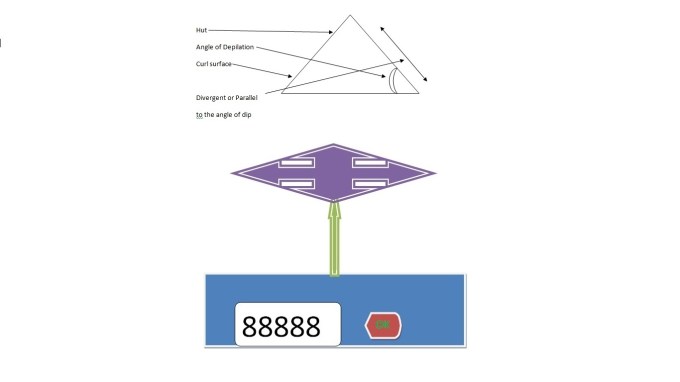
If one hut is built in such a way that one surface curl and other surface diverge or parallel to the angle of dip of the Earth at that place and if electromagnetic waves are superimposed on the hut in such a way that it resonates with the internal space of the hut, It will change the frame of reference of person or items inside the hut.   That person or item can be transferred to another hut having the same frame of reference in no time, irrespective of the distance between the two huts.

Channel

In this phenomenon angle of dip on the surface of earth is used as channel, because of difference on different places on the earth.

Theory

We know about two types of movements of earth, rotational movement around its axis with the rotational speed of 1670.00 Km/hour and on the other around the sun with the revolution speed of 107000.00 Km/hour. The speed of sun is =900000.00 Km/Hours. We can achieve the resultant speed through multiplication of above three speeds by applying above Hypothesis i.e. 1670 x 107000 x 900000 =160821000000000.00 Km/hour.

If we achieve resultant speed of the sum of above three  speeds by applying the above hypothesis, then we get = 1670 + 10700 + 900000 = 1008670.00 Km/Hour which is 1069.976 times less than speed of light, but this speed is also efficient to help change frame of reference

 Gain & Achievements

“Changing Frame of Reference of Anything”, aims to provide facility of transferring of goods/ human being from one place to another, anywhere on earth within 1/7 second, hence these type achievements are which we can apply as follows:

1 Time dilation By Lorentz Transformations Equation   T = Tx √(1-V2/C2)

Where T   à Achieve Time Dilating

            Tà Original Time

            C   à  Velocity of Light

            V  à  Resultant Velocity  

 2 Length dilation By Lorentz Transformations Equation   L = Lx √(1-V2/C2)

Where L   à Achieve Length Dilating

            Là Original Length

            C   à  Velocity of Light

            V  à  Resultant Velocity  

 3 Mass dilation By Lorentz Transformations Equation   M = M1  / √(1-V2/C2)

Where M   à Achieve Mass Dilating

            Mà Original Mass

            C   à  Velocity of Light

            V  à  Resultant Velocity  

 4 Energy & Mass Conversion By Einstein Equation   E = M x C2

Where E   à Energy

            M  à Mass

            C   à  Velocity of Light

Classical Experimental Apparatus: It consists of a four blade fan connected to a high speed motor with speed control. By use of this apparatus we can measure the frequency of electric source of any light source.

When we rotate the fan by accelerate and operating the motor in any light whose frequency is to be measured, we can see fringes in the blade. We can see that initially the fringes are rotating but with the speed adjustment number of fringes can be counted and their rotation can be stopped. When there are four stationary fringes are observed then the reading of accelerometer is taken:

Frequency of Electricity (F) = Number of rotation per sec of motor (R) x Number of fringes (N)

E.g.   If R = 12.5, Rotation per Second and N = 4

Then the Frequency of Electricity in Light Form (F) = 12.5 X 4 = 50 Hz.

Hence it proves the relation between F, R and N

INCREASING TREND IN FOREIGN DIRECT INVESTMENT (FDI) IN INDIA

By: Prapanna Lahiri

Generally speaking Foreign Direct Investment (FDI) refers to capital inflows from abroad that invest in the production capacity of an economy. It is direct investment into production or business in a country by a foreign company either by buying a domestic company or by expanding operations of its existing business. Capital formation is an important determinant of economic growth. When domestic savings and investments are inadequate for a country’s overall development, foreign direct investment (FDI) plays a complementary role in filling the gap.

The establishment of the British East India Company was the historical instance of FDI coming into India. British companies set up units in few sectors like mining that served their own economic and business interest.

Towards the end of Indian Independence movement and after independence, a few Indian political leaders led by Jawaharlal Nehru were attracted to socialism. After several trips to USSR, Nehru was convinced that post independence India should be a socialist republic. But instead of adopting socialism in its pure form Nehru adopted mixed socialism where both the state and the private sectors existed competing with each other. To operate under this socialist ideology the private sectors were issued licences to produce and sell their products in the country. This was referred to as ‘Licence Raj’ system. The government aimed at exercising control over foreign exchange transactions. All dealings in foreign exchange were regulated under the Foreign Exchange Regulation Act (FERA), 1973, the violation of which was considered a criminal offence. Through this Act, the government tried to conserve foreign exchange resources for the country’s economic development. Consequently, the investment process was plagued with many hurdles including unethical bureaucratic practices.

This License Raj system existed for around four decades, till the government under Prime Minister Rajiv Gandhi initiated a liberalisation policy. But the actual progress was made under Prime Minister P.V.Narasimha Rao in 1991, when he appointed Economist Manmohan Singh, then a non-political figure, as finance minister signalling a different approach to economics. Indian economy experienced major policy changes. This new economic reform, popularly known as, Liberalization, Privatisation and Globalisation (LPG model) was aimed at making the Indian economy globally competitive.  The liberalisation programme encouraged FDI. Under this deregulated regime, FERA was consolidated and amended to introduce the less stringent Foreign Exchange Management Act (FEMA) 1999, meant to facilitate external trade and payments and improved access to foreign exchange. The reforms envisaged that FDI in sectors, to the extent permitted under automatic route, would not require any prior approval either by the Government or RBI. FDI in activities not covered under the automatic route would require prior Government approval.

However, this reform and liberalisation process was not exactly smooth.  Contrary to the grand narrative of ‘opening of flood-gates idea’ of 1991, what actually happened was a gradual process of change in policies on investment in certain sub-sectors of the Indian economy. The leftists true to their stated stance opposed the general economic policy unfurled in 1991. A significant political opposition also came from the Swadeshi Jagaran Manch of the RSS. A political storm was raised around Foreign Direct Investment owing to a lack of understanding about it. The policy of globalisation and privatisation were perceived to strike a heavy blow at the self reliant path of development. The target of ‘fight’ against this globalisation and privatisation were the multinational companies (MNCs). FDI was analysed as a tool of MNCs to acquire vital sectors of the economy.

But over some years, changes in the national political climate had precipitated a marked trend towards greater acceptability of FDI. The far reaching unanimity over FDI came in 1995-1996 when the government began to showcase the progress made as a result of FDI. Statistics had been available for most years and FDI entered the mindset of the governments. The future of India’s growth and output was seen to be connected to FDI and it was deemed necessary for promoting higher growth of output, exports and employment.

Foreign investments came in various sectors of the economy showing a good growth in the standard of living, per capita income and Gross Domestic Product. An UNCTAD survey projected India as the second most important FDI destination (after China) for the trans-national corporations during 2010–2012. Successive Indian governments’ policy regime and a robust business environment ensured persistent flow of FDI into the country. With abundant high-skilled manpower, India provided enormous opportunities for investment making it a liberal, attractive and investor friendly destination. The government in recent years had taken measures aimed at relaxing FDI norms across sectors such as defence, PSU oil refineries, telecom, power exchanges, stock exchanges etc. It raised FDI cap in insurance to 49 per cent from 26 percent. Cabinet has cleared a proposal allowing 100 per cent FDI in railway infrastructure, network creation and supply of rolling stock for bullet trains but excluding operations.  The Government has amended the FDI policy regarding Construction Development Sector: low cost affordable housing, and development of smart cities. The relaxation achieved the purpose of sustaining the FDI flow, a major source of non-debt financial resource and a critical driver of economic growth. FDI to India doubled to US$ 4.48 billion in January 2015, the highest inflow in last 29 months. The data of Department of Industrial Policy and Promotion (DIPP) shows FDI inflows had grown to US$ 25.52 billion during the April-January 2014-15 up 36 per cent year-on-year from the corresponding period of last fiscal. The top 10 sectors receiving FDI include telecommunication followed by services, automobiles, computer software, computer hardware and pharmaceuticals. Finally, the high voltage “Make in India” campaign is a success with a 56% jump in FDI since its launch in September 2014. All these clearly show the faith that overseas investors have instilled in the country’s economy. Nothing summarises the optimism better than the words of the IMF chief, Christine Lagard (in an interview to Times of India), “India has an opportunity to become one of the world’s most dynamic economies. My message will be: Seize it.”

CAUSES OF BENDS IN DIVERS

By : Aamarpali Puri

Decompression sickness or The Bends, or Caisson disease, is mainly found in scuba divers or people participating in high altitude or aerospace events when dissolved gases (mainly nitrogen) come out of solution in bubbles and affects human body area including joints, lung, heart, skin and brain. The bubbles of gas formed due to change in pressure during Scuba diving. Astronauts and aviators that experience rapid changes in pressure from sea level also experience bends.

SCUBA stands for Self Contained Underwater Breathing Apparatus. It is different from holding breadth and diving. In this type of diving, the diver under deep sea water carries air tank. The gas in the air tank increases in pressure as the divers descends. Gases like nitrogen cause increased pressure and get dissolved into the tissues of the diver’s body. The human can’t consume nitrogen so it gets accumulated in the tissues. When the diver returns to sea surface, then the pressure decreases. The Nitrogen gas tries to leave the tissues and come out as bubbles which lead to blocking of blood flow. Stretching or tearing off nerves may happen.  Occurrence of Bends is dependent on the depth and duration of the dive. It leads to extreme fatigue, deafness, rashes, itching. It may choke lungs and cause back pain. Drinking alcohol before diving causes our brain at risk of injury due to nitrogen bubbles. The worst affected area is spinal cord.  Providing high flow of oxygen helps in fast recovery. Diving deeper then recommended level and staying deep sea for more duration increases the risk to great extent. Flying immediately after diving is very dangerous. Diver while returning back to sea level should rise up slowly not very fast. In very serious conditions the person is kept in hyperbaric oxygen chambers where the nitrogen is again dissolved back to the tissues and can then get metabolized normally.

It can be avoided by learning the following:

  1. How long should diver stay under water?
  2. How deep diver can go in sea?
  3. How much time diver should take while returning back to sea level?
  4. How much gap should be kept between consecutive dives?
  5. After how much time diver can board flight?

Some other diseases deep sea diver may encounter are Nitrogen Narcosis or Rapture of the deep, Air Embolisms, Pneumothoraces and Bad Air Injuries.

Nitrogen Narcosis: At depths greater than 100 feet breathing nitrogen leads to intoxicating effect (“temporary decline or loss of senses and movement, numbness) which is known as Nitrogen Narcosis. Breathing nitrogen under high pressure causes difficulty in concentration, poor judgment hallucination.

Air Embolism: Person suffering from water stress suffers from this condition. In this a gas bubble enters vascular system and cause blockage in blood vessels.

Pneumothoraces: It is found mainly in person suffering from lung disease which might be expected to cause gas trapping during ascent in divers. It occurs more frequently in divers whose lungs are small and stiff. In extreme cases it leads to lung rupture.

Bad air Injuries: It includes carbon dioxide, carbon monoxide poisoning. If the diver inhales contaminated gases, most commonly carbon monoxide, when faulty air compressor leaks harmful fumes into diver’s tank, Haemoglobin is unable to transport the oxygen properly in the tissues. Even the high percentage of inhaled oxygen over prolonged period may be harmful.

“NIRBAAK”: An Opinion oriented Post Mortem Report

By Niladri Nath Sanyal

 On third of may 2015 I watched the much awaited Bengali movie “NIRBAAK” by Srijit Mukherjee in Theatre.

There are four love stories linked with a thread of “LOVE”. The movie begins with the story of a person who is in love with oneself followed by Jisshu Sengupta and Sushmita Sen’s love story where we experience an extraordinary love of a dog coming in between them … love of a dog with his master. Here we get to see height of possessiveness. Lastly the love of a very ordinary man … a man who does not allow even death to come on their way. Here love crosses all the barriers of death and becomes immortal. This film simply teaches us to fall in love once again but with a different view-point.

It is an extraordinary movie by Srijit but somehow or the other my expectations were thousand times more than what I got today.

All the actors have done their job nicely and have given their one hundred percent. Another thing which made me feel bad is that, still the Indian audience is yet to give proper respect to Jisshu Sengupta. Sushmita  Sen has done a great job. Anjan Dutt, Ritwick Chakraborty dosent need any special mention. They are superb in their field. Anjan Dutt’s character has made me think hundred times of falling in love with my own self which I never thought of till date.

Cinematography, background music, editing is superb. Everywhere I got the fine touches of Srijit. But what I expected was an abstract movie which would have compelled us to use our interpersonal skills to enjoy the movie at its fullest. Anyways, we can consider this movie to be the beginning of new era of “New Indian Cinema” of the directors of next generation. These types of films basically pave the way for the directors of next generations.

I have been waiting for this movie since Srijit Mukherjee has started talking about his baby. Somehow or the other this movie has given me a hollow feeling which cannot be defined in words. One should not make a mistake that I felt sad after coming out from the theaters.

A special thanks should be given to “Sree Venkatesh Films“ for showing their interests in experimental cinema and taking risk in investing in a film where there is a minimum chance of monetary gain.

Lastly, I can say Sir you have done a great job and keep it up always in future for the audience who would love to see good and sensible cinema and run to the theatres for their own interest. A special hope will always be there that all the film production houses should at least once invest in sensible and experimental Bengali cinema and give it a fresh lease of life.

Effects of Globalization in Management

By: Prapanna Lahiri

The concept of globalisation means an increasing flow of goods and resources across national boundaries resulting in emergence of a complementary set of organisational structures to manage the expanding network of international economic activity and transactions. In the obtaining global economy, firms and financial institutions operate beyond the confines of national borders. In such a world goods, factors of production and financial assets would be almost perfect substitutes everywhere and national states no longer remain distinct economies. Globalisation shows a trend towards integration of four components of a global economic system namely globalisation of production, markets, investment and technology.

Globalisation presents developing nations with opportunities for economic growth while simultaneously subjecting those to highly competitive contexts where playing fields are not always level. This has resulted in what has become known as the digital divide. No country remains an island unto itself but forms part of the emerging global village. Newer technologies continue to make the world a smaller place.

Management executives now need to become more conversant with alternative strategic management processes that are more effective in dealing with the associated uncertainty, instability and discontinuous change. In the increasingly free market economy successful business enterprises will, henceforth, function in a global marketplace where accent is on profitably meeting constantly changing client needs, expectations and aspirations. Furthermore, enterprises will, in future, be forced to take cognisance of environmental or ecological impact of their business operations too. Environmental activists have increasingly begun focussing on the ecological issues following disaster situations that has materialised consequent upon indiscriminate economic development.

In the global investment scenario, the views of international investors have a greater influence on domestic stock prices. The veracity of this observation has been amply demonstrated by the volatility of exchange rate of the domestic currency against the US dollar. In the reality of global integration of markets, production, investment and technology, the concept of strategic threats and opportunities associated with the global economy is to be clearly understood and strategically managed.

A significant shift has occurred in the area of management practice due to globalisation. Corporate Man Management has been impacted by considerations of skill and cost advantages that drive globalisation. Personnel Management (Theory X) approach of yesteryears has been replaced by more practical Human Resource Management (Theory Y) approach. Organisational structures defined by ‘hierarchical positions’ have given way to more democratic flat decentralised organisation structures driven by core competencies and problem solving skills. The new generation leadership styles can no longer be straight jacketed as “good or bad” styles. A variety of time specific and industry specific leadership styles have evolved to achieve predefined organisational objectives. Economic liberalisation has resulted in more contractual and outsourced employment reducing organised sector employment. Free trade has ensured that countries specialising in the production of certain goods and services efficiently, at lesser costs, will produce them while importing other commodities. The savings thus gained can be diverted for other more productive jobs. The challenge to management is to adapt to this changed global environment.