By: Aamarpali Puri
Author: Aamarpali
In Concept Research Foundation we will not only invite talented researchers to share their ideas and works with us, but we will also try to inculcate a sense of research among the young generation who can give us a tomorrow that will be better than any other yesterday that has ever come to this world.
At the initial phase we are inviting articles on any discipline and of any length to be published in this blog of the Concept Research Foundation.
Please feel free to contact me at conceptresearchfoundation@gmail.com for any query or sending articles that you would like to publish in this blog of the Concept Research Foundation.
Thanking you and looking for your everlasting support.
Changing Frame of Reference / Dimension of Any Thing
By Mohammad Arif Ali Usmani
M.Tech. (Information Technology)
Ex. Asst. Professor Department of Computer Science & Engineering and Information Technology
College of Engineering Science & Technology Mahanlalganj Lucknow U.P. India
Historical Background
In ancient history Emperor Suddat & Emperor Numrood, Emperor of Babylon (old Iraq) and Pharaohs of Egypt (Like Khufu and Ramesses etc. ) knew about this theory. That’s why they made pyramids’ of different types at different places and cities & paradise as of which nowadays having so many proof.
Hypothesis
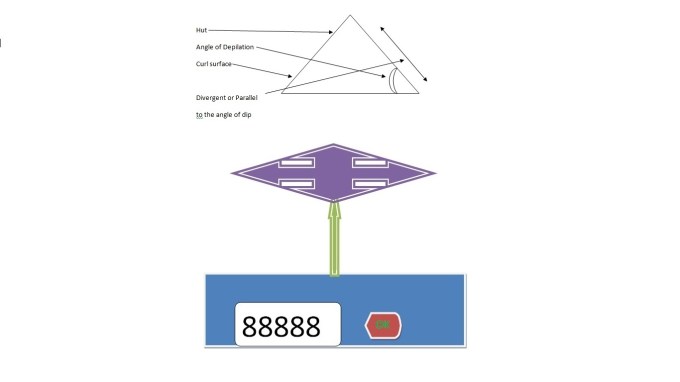
If one hut is built in such a way that one surface curl and other surface diverge or parallel to the angle of dip of the Earth at that place and if electromagnetic waves are superimposed on the hut in such a way that it resonates with the internal space of the hut, It will change the frame of reference of person or items inside the hut. That person or item can be transferred to another hut having the same frame of reference in no time, irrespective of the distance between the two huts.
Channel
In this phenomenon angle of dip on the surface of earth is used as channel, because of difference on different places on the earth.
Theory
We know about two types of movements of earth, rotational movement around its axis with the rotational speed of 1670.00 Km/hour and on the other around the sun with the revolution speed of 107000.00 Km/hour. The speed of sun is =900000.00 Km/Hours. We can achieve the resultant speed through multiplication of above three speeds by applying above Hypothesis i.e. 1670 x 107000 x 900000 =160821000000000.00 Km/hour.
If we achieve resultant speed of the sum of above three speeds by applying the above hypothesis, then we get = 1670 + 10700 + 900000 = 1008670.00 Km/Hour which is 1069.976 times less than speed of light, but this speed is also efficient to help change frame of reference
Gain & Achievements
“Changing Frame of Reference of Anything”, aims to provide facility of transferring of goods/ human being from one place to another, anywhere on earth within 1/7 second, hence these type achievements are which we can apply as follows:
1 Time dilation By Lorentz Transformations Equation T = T1 x √(1-V2/C2)
Where T à Achieve Time Dilating
T1 à Original Time
C à Velocity of Light
V à Resultant Velocity
2 Length dilation By Lorentz Transformations Equation L = L1 x √(1-V2/C2)
Where L à Achieve Length Dilating
L1 à Original Length
C à Velocity of Light
V à Resultant Velocity
3 Mass dilation By Lorentz Transformations Equation M = M1 / √(1-V2/C2)
Where M à Achieve Mass Dilating
M1 à Original Mass
C à Velocity of Light
V à Resultant Velocity
4 Energy & Mass Conversion By Einstein Equation E = M x C2
Where E à Energy
M à Mass
C à Velocity of Light
Classical Experimental Apparatus: It consists of a four blade fan connected to a high speed motor with speed control. By use of this apparatus we can measure the frequency of electric source of any light source.
When we rotate the fan by accelerate and operating the motor in any light whose frequency is to be measured, we can see fringes in the blade. We can see that initially the fringes are rotating but with the speed adjustment number of fringes can be counted and their rotation can be stopped. When there are four stationary fringes are observed then the reading of accelerometer is taken:
Frequency of Electricity (F) = Number of rotation per sec of motor (R) x Number of fringes (N)
E.g. If R = 12.5, Rotation per Second and N = 4
Then the Frequency of Electricity in Light Form (F) = 12.5 X 4 = 50 Hz.
Hence it proves the relation between F, R and N
INCREASING TREND IN FOREIGN DIRECT INVESTMENT (FDI) IN INDIA
By: Prapanna Lahiri
Generally speaking Foreign Direct Investment (FDI) refers to capital inflows from abroad that invest in the production capacity of an economy. It is direct investment into production or business in a country by a foreign company either by buying a domestic company or by expanding operations of its existing business. Capital formation is an important determinant of economic growth. When domestic savings and investments are inadequate for a country’s overall development, foreign direct investment (FDI) plays a complementary role in filling the gap.
The establishment of the British East India Company was the historical instance of FDI coming into India. British companies set up units in few sectors like mining that served their own economic and business interest.
Towards the end of Indian Independence movement and after independence, a few Indian political leaders led by Jawaharlal Nehru were attracted to socialism. After several trips to USSR, Nehru was convinced that post independence India should be a socialist republic. But instead of adopting socialism in its pure form Nehru adopted mixed socialism where both the state and the private sectors existed competing with each other. To operate under this socialist ideology the private sectors were issued licences to produce and sell their products in the country. This was referred to as ‘Licence Raj’ system. The government aimed at exercising control over foreign exchange transactions. All dealings in foreign exchange were regulated under the Foreign Exchange Regulation Act (FERA), 1973, the violation of which was considered a criminal offence. Through this Act, the government tried to conserve foreign exchange resources for the country’s economic development. Consequently, the investment process was plagued with many hurdles including unethical bureaucratic practices.
This License Raj system existed for around four decades, till the government under Prime Minister Rajiv Gandhi initiated a liberalisation policy. But the actual progress was made under Prime Minister P.V.Narasimha Rao in 1991, when he appointed Economist Manmohan Singh, then a non-political figure, as finance minister signalling a different approach to economics. Indian economy experienced major policy changes. This new economic reform, popularly known as, Liberalization, Privatisation and Globalisation (LPG model) was aimed at making the Indian economy globally competitive. The liberalisation programme encouraged FDI. Under this deregulated regime, FERA was consolidated and amended to introduce the less stringent Foreign Exchange Management Act (FEMA) 1999, meant to facilitate external trade and payments and improved access to foreign exchange. The reforms envisaged that FDI in sectors, to the extent permitted under automatic route, would not require any prior approval either by the Government or RBI. FDI in activities not covered under the automatic route would require prior Government approval.
However, this reform and liberalisation process was not exactly smooth. Contrary to the grand narrative of ‘opening of flood-gates idea’ of 1991, what actually happened was a gradual process of change in policies on investment in certain sub-sectors of the Indian economy. The leftists true to their stated stance opposed the general economic policy unfurled in 1991. A significant political opposition also came from the Swadeshi Jagaran Manch of the RSS. A political storm was raised around Foreign Direct Investment owing to a lack of understanding about it. The policy of globalisation and privatisation were perceived to strike a heavy blow at the self reliant path of development. The target of ‘fight’ against this globalisation and privatisation were the multinational companies (MNCs). FDI was analysed as a tool of MNCs to acquire vital sectors of the economy.
But over some years, changes in the national political climate had precipitated a marked trend towards greater acceptability of FDI. The far reaching unanimity over FDI came in 1995-1996 when the government began to showcase the progress made as a result of FDI. Statistics had been available for most years and FDI entered the mindset of the governments. The future of India’s growth and output was seen to be connected to FDI and it was deemed necessary for promoting higher growth of output, exports and employment.
Foreign investments came in various sectors of the economy showing a good growth in the standard of living, per capita income and Gross Domestic Product. An UNCTAD survey projected India as the second most important FDI destination (after China) for the trans-national corporations during 2010–2012. Successive Indian governments’ policy regime and a robust business environment ensured persistent flow of FDI into the country. With abundant high-skilled manpower, India provided enormous opportunities for investment making it a liberal, attractive and investor friendly destination. The government in recent years had taken measures aimed at relaxing FDI norms across sectors such as defence, PSU oil refineries, telecom, power exchanges, stock exchanges etc. It raised FDI cap in insurance to 49 per cent from 26 percent. Cabinet has cleared a proposal allowing 100 per cent FDI in railway infrastructure, network creation and supply of rolling stock for bullet trains but excluding operations. The Government has amended the FDI policy regarding Construction Development Sector: low cost affordable housing, and development of smart cities. The relaxation achieved the purpose of sustaining the FDI flow, a major source of non-debt financial resource and a critical driver of economic growth. FDI to India doubled to US$ 4.48 billion in January 2015, the highest inflow in last 29 months. The data of Department of Industrial Policy and Promotion (DIPP) shows FDI inflows had grown to US$ 25.52 billion during the April-January 2014-15 up 36 per cent year-on-year from the corresponding period of last fiscal. The top 10 sectors receiving FDI include telecommunication followed by services, automobiles, computer software, computer hardware and pharmaceuticals. Finally, the high voltage “Make in India” campaign is a success with a 56% jump in FDI since its launch in September 2014. All these clearly show the faith that overseas investors have instilled in the country’s economy. Nothing summarises the optimism better than the words of the IMF chief, Christine Lagard (in an interview to Times of India), “India has an opportunity to become one of the world’s most dynamic economies. My message will be: Seize it.”

CAUSES OF BENDS IN DIVERS
By : Aamarpali Puri
Decompression sickness or The Bends, or Caisson disease, is mainly found in scuba divers or people participating in high altitude or aerospace events when dissolved gases (mainly nitrogen) come out of solution in bubbles and affects human body area including joints, lung, heart, skin and brain. The bubbles of gas formed due to change in pressure during Scuba diving. Astronauts and aviators that experience rapid changes in pressure from sea level also experience bends.
SCUBA stands for Self Contained Underwater Breathing Apparatus. It is different from holding breadth and diving. In this type of diving, the diver under deep sea water carries air tank. The gas in the air tank increases in pressure as the divers descends. Gases like nitrogen cause increased pressure and get dissolved into the tissues of the diver’s body. The human can’t consume nitrogen so it gets accumulated in the tissues. When the diver returns to sea surface, then the pressure decreases. The Nitrogen gas tries to leave the tissues and come out as bubbles which lead to blocking of blood flow. Stretching or tearing off nerves may happen. Occurrence of Bends is dependent on the depth and duration of the dive. It leads to extreme fatigue, deafness, rashes, itching. It may choke lungs and cause back pain. Drinking alcohol before diving causes our brain at risk of injury due to nitrogen bubbles. The worst affected area is spinal cord. Providing high flow of oxygen helps in fast recovery. Diving deeper then recommended level and staying deep sea for more duration increases the risk to great extent. Flying immediately after diving is very dangerous. Diver while returning back to sea level should rise up slowly not very fast. In very serious conditions the person is kept in hyperbaric oxygen chambers where the nitrogen is again dissolved back to the tissues and can then get metabolized normally.
It can be avoided by learning the following:
- How long should diver stay under water?
- How deep diver can go in sea?
- How much time diver should take while returning back to sea level?
- How much gap should be kept between consecutive dives?
- After how much time diver can board flight?
Some other diseases deep sea diver may encounter are Nitrogen Narcosis or Rapture of the deep, Air Embolisms, Pneumothoraces and Bad Air Injuries.
Nitrogen Narcosis: At depths greater than 100 feet breathing nitrogen leads to intoxicating effect (“temporary decline or loss of senses and movement, numbness) which is known as Nitrogen Narcosis. Breathing nitrogen under high pressure causes difficulty in concentration, poor judgment hallucination.
Air Embolism: Person suffering from water stress suffers from this condition. In this a gas bubble enters vascular system and cause blockage in blood vessels.
Pneumothoraces: It is found mainly in person suffering from lung disease which might be expected to cause gas trapping during ascent in divers. It occurs more frequently in divers whose lungs are small and stiff. In extreme cases it leads to lung rupture.
Bad air Injuries: It includes carbon dioxide, carbon monoxide poisoning. If the diver inhales contaminated gases, most commonly carbon monoxide, when faulty air compressor leaks harmful fumes into diver’s tank, Haemoglobin is unable to transport the oxygen properly in the tissues. Even the high percentage of inhaled oxygen over prolonged period may be harmful.
“NIRBAAK”: An Opinion oriented Post Mortem Report
By Niladri Nath Sanyal
On third of may 2015 I watched the much awaited Bengali movie “NIRBAAK” by Srijit Mukherjee in Theatre.
There are four love stories linked with a thread of “LOVE”. The movie begins with the story of a person who is in love with oneself followed by Jisshu Sengupta and Sushmita Sen’s love story where we experience an extraordinary love of a dog coming in between them … love of a dog with his master. Here we get to see height of possessiveness. Lastly the love of a very ordinary man … a man who does not allow even death to come on their way. Here love crosses all the barriers of death and becomes immortal. This film simply teaches us to fall in love once again but with a different view-point.
It is an extraordinary movie by Srijit but somehow or the other my expectations were thousand times more than what I got today.
All the actors have done their job nicely and have given their one hundred percent. Another thing which made me feel bad is that, still the Indian audience is yet to give proper respect to Jisshu Sengupta. Sushmita Sen has done a great job. Anjan Dutt, Ritwick Chakraborty dosent need any special mention. They are superb in their field. Anjan Dutt’s character has made me think hundred times of falling in love with my own self which I never thought of till date.
Cinematography, background music, editing is superb. Everywhere I got the fine touches of Srijit. But what I expected was an abstract movie which would have compelled us to use our interpersonal skills to enjoy the movie at its fullest. Anyways, we can consider this movie to be the beginning of new era of “New Indian Cinema” of the directors of next generation. These types of films basically pave the way for the directors of next generations.
I have been waiting for this movie since Srijit Mukherjee has started talking about his baby. Somehow or the other this movie has given me a hollow feeling which cannot be defined in words. One should not make a mistake that I felt sad after coming out from the theaters.
A special thanks should be given to “Sree Venkatesh Films“ for showing their interests in experimental cinema and taking risk in investing in a film where there is a minimum chance of monetary gain.
Lastly, I can say Sir you have done a great job and keep it up always in future for the audience who would love to see good and sensible cinema and run to the theatres for their own interest. A special hope will always be there that all the film production houses should at least once invest in sensible and experimental Bengali cinema and give it a fresh lease of life.
Effects of Globalization in Management
By: Prapanna Lahiri
The concept of globalisation means an increasing flow of goods and resources across national boundaries resulting in emergence of a complementary set of organisational structures to manage the expanding network of international economic activity and transactions. In the obtaining global economy, firms and financial institutions operate beyond the confines of national borders. In such a world goods, factors of production and financial assets would be almost perfect substitutes everywhere and national states no longer remain distinct economies. Globalisation shows a trend towards integration of four components of a global economic system namely globalisation of production, markets, investment and technology.
Globalisation presents developing nations with opportunities for economic growth while simultaneously subjecting those to highly competitive contexts where playing fields are not always level. This has resulted in what has become known as the digital divide. No country remains an island unto itself but forms part of the emerging global village. Newer technologies continue to make the world a smaller place.
Management executives now need to become more conversant with alternative strategic management processes that are more effective in dealing with the associated uncertainty, instability and discontinuous change. In the increasingly free market economy successful business enterprises will, henceforth, function in a global marketplace where accent is on profitably meeting constantly changing client needs, expectations and aspirations. Furthermore, enterprises will, in future, be forced to take cognisance of environmental or ecological impact of their business operations too. Environmental activists have increasingly begun focussing on the ecological issues following disaster situations that has materialised consequent upon indiscriminate economic development.
In the global investment scenario, the views of international investors have a greater influence on domestic stock prices. The veracity of this observation has been amply demonstrated by the volatility of exchange rate of the domestic currency against the US dollar. In the reality of global integration of markets, production, investment and technology, the concept of strategic threats and opportunities associated with the global economy is to be clearly understood and strategically managed.
A significant shift has occurred in the area of management practice due to globalisation. Corporate Man Management has been impacted by considerations of skill and cost advantages that drive globalisation. Personnel Management (Theory X) approach of yesteryears has been replaced by more practical Human Resource Management (Theory Y) approach. Organisational structures defined by ‘hierarchical positions’ have given way to more democratic flat decentralised organisation structures driven by core competencies and problem solving skills. The new generation leadership styles can no longer be straight jacketed as “good or bad” styles. A variety of time specific and industry specific leadership styles have evolved to achieve predefined organisational objectives. Economic liberalisation has resulted in more contractual and outsourced employment reducing organised sector employment. Free trade has ensured that countries specialising in the production of certain goods and services efficiently, at lesser costs, will produce them while importing other commodities. The savings thus gained can be diverted for other more productive jobs. The challenge to management is to adapt to this changed global environment.
Importance of English language in Education
By : Prapanna Lahiri
A language is a systematic means to communicate ideas, moods, feelings and attitudes using sounds, gestures, signs or marks. A language can be written (using signs or marks). It can also be spoken (using voice, sounds and gestures). Hence, language is the way to connect with large number people. In search of a means to connect to as many people around the world as possible, especially in this era of globalisation, English language came in handy to accomplish this purpose. In a way it has helped unite the world in universal brotherhood.
Historically, when the King James Version (KJV) or the Authorised Version (AV) of the Bible was published in 1611, the educated English of London formed the core of what is now called Standard English. By the time of the American Declaration of Independence in 1776, English had become international and recognisable as the language we use today.
Present-day English is an immensely varied language, having absorbed material from many other tongues. It is spoken by more than 300 million native speakers and between 400 and 800 million foreign users. It is the official language of air transport and shipping; the leading language of science, technology, computers, and commerce; and a major medium of education, publishing, international negotiation and diplomacy.
English language is today one tool to establish our viewpoint, propagate various ideas among the international audience and to learn from others’ experience. Over centuries the role of English is most evident in the field of education. It has attracted people because of the wealth of literature and knowledge enshrined in it. Undoubtedly, English is the language of learning. Most of the world’s books are written in English. Most research papers are published in English. It is difficult to think of studying science without learning English. Globally, careers in science and technology, business and commerce require a good knowledge of English. The internet has transformed our lives and it would be funny to imagine an internet without English. The syntax of most of the computer programming languages is also made up of English keywords.
One knows that English-speaking persons can be traced in all the continents of the world and is the reason for its importance in the compulsory education of many countries across the globe. Acknowledging the importance of English for life, we also know when to begin learning it. English has several advantages when it has been taught from the grass root level. For non-native speakers of the language elementary school age is a brilliant time to learn a second language. Researches conducted has shown that 6-13 years of age is the right age to learn a second language besides the mother language, as the brain condition is just right to receive something new. English is important to be learned if one wants to be a knowledgeable person. Having ability in English also helps the students to study because what he or she learns is not limited to one country but becomes a window to the world.
A Manager’s Role and Responsibilities – Folklore and Facts
By : Anamitra Roy
HUMAN TOUCH
By: Anamitra Roy
“To touch the soul of another human being is to walk on holy ground.”
Stephen R. Covey
The first time I ever came across this term “human touch” was way back in 2008.
It was the first session of the Indian Premier League. The Kolkata Knight Riders team was being coached by world famous coach and management expert from Australia, John Buchchanan. Buchchannan just the previous year had won the World Cup for Australia. In one of the interviews before the first match of the tournament, he talked about the exercising of “human touch” with the players in the team. I still remember the interviewer was surprised and asked him further about human touch and why he was doing this. Buchchanan explained. He was going to each and every player of the team after the net sessions. He was talking to them about their positives, reminding the players about their strengths, solving all their personal problems if they allowed the coach to do so and ending the session with a firm hand shake. The result was unimaginably positive. The players accepted their new coach. They were sharing not only their professional problems but at times also emotional disorder related matters. They were opening up like a can of beans … discussing their relational problems about their wives, girlfriends, partners, mates and more importantly, getting solutions to these problems through these discussions. A great example of “human touch” … a great example of winning people through “human touch.”
As a young man I was deeply impressed with Buchchanan. I was impressed with the way the term “human touch” was coined and with the way it was being exercised by one of the greatest coaches in the history of world sports. I kept on thinking about this. I asked myself about what is “human touch”. I realized that it was all about touching, touching one, touching one without actually touching him/ her. But then how is that “touching” to be done without actual touching. I realized that it is all about touching through communication … words/ gestures or may be through a combination of both.
It is very difficult to touch someone without actually touching that person. It is, I felt, getting into someone and then providing that person with an emotional support to overcome the negatives and fill up the deficiencies. With utter shock I understood that this concept of “human touch” is almost as old as probably the human civilization is. After all what did people like Christ, Buddha, Mohammed, Gandhi and Mother Teresa were into. The answer was very simple. “Human touch”.
What did Mother Teresa mean when she said, “Touch a leper, touch him with love.” After all it was all about “human touch”. I was astonished to consider the degree of patience and perseverance the Mother had in herself. This patience and perseverance allowed her to understand the other person and accept all the minuses of that person. The passion for exercising “human touch” also needs to be taken note of.
I remember watching a movie a few years back. It was a typical monsoon afternoon of 2003. I was lying on a cozy sofa in my living room and watching a Bollywood blockbuster, “Munnabhai MBBS”. There was a tag line attached to the name of the movie “He might just cure you.” This movie was about an antisocial element. He pretended to be a doctor although he lacked the formal qualifications to do so. But this lack of qualifications was not a thorn for him. He was quietly and gradually curing his patients. It was all by the exercising of “human touch”. The memories of that movie sparked a sensational feeling in me. It was all about “human touch”. The male protagonist Munna was a phenomenon among the staffs of the hospital. There was a scene in that movie where the male protagonist was hugging a sweeper and thanking him for his tireless services of years to keep the hospital premises clean. The sweeper literally had tears in his eyes … few priceless tears getting the sweeper closer to Munna forever.
I realized that absence of rigidity was another quality that was required to exercise “human touch”.
All the great people who have enriched human history forever, had exercised “human touch” at some point of time and it was all because they were patient, perseverant, lacked rigidity and had tremendous passion and faith in “human touch”.
But then what would be the result of such an exercise? An unbreakable union, a difficult and much desired change at last easily brought in, a feeling of positivity, prosperity, a feeling of being alone getting vanished, emotional solidarity being established and a lot of happiness getting manufactured and spread everywhere.
I instantly started to exercise “human touch”.
I started to teach four poor but meritorious students. What followed was that I was no more alone in this universe. I had four more friends who were ready to do anything for me, who are still now connected to me just for the sheer enjoyment of it.
I started to take burdens of my Dad. Result was that I developed a bond with him which was never there since my adolescent days.
I started to share the job burdens of my colleagues at my workplace. Result was that I was surrounded by a group of happy and close friends at my workplace.
I started to donate for charity. Result was that I became an even happier person who was even more confident about his existence.
Most importantly, I started to convince more people to exercise “human touch”. Result was that I kept on getting motivated to write, speak and exercise more of it.
After all it is “human touch” that has kept the world civilized, united and forward moving.
Cheers to “human touch”.
“Nothing eases suffering like Human touch.”
Bobby Fischer
The Triangle of life
EXTRACT FROM DOUG COPP’S ARTICLE ON ‘THE TRIANGLE OF LIFE‘
Courtesy Mr Sandip Ramanuj
Nepal experienced one of the worst natural disaster recently, this article is shared here to help people get correct knowledge about where to go during an Earthquake?
Remember that stuff about hiding under a table or standing in a doorway? Well, forget it! This is a real eye opener. It could save your life someday.
My name is Doug Copp. I am the Rescue Chief and Disaster Manager of the American Rescue Team International (ARTI ), the world’s most experienced rescue team. The information in this article will save lives in an earthquake. I have crawled inside 875 collapsed buildings, worked with rescue teams from 60 countries, founded rescue teams in several countries, and I am a member of many rescue teams from many countries. I was the United Nations expert in Disaster Mitigation for two years, and have worked at every major disaster in the world since 1985, except for simultaneous disasters. The first building I ever crawled inside of was a school in Mexico City during the 1985 earthquake. Every child was under its desk. Every child was crushed to the thickness of their bones. They could have survived by lying down next to their desks in the aisles. It was obscene — unnecessary.
Simply stated, when buildings collapse, the weight of the ceilings falling upon the objects or furniture inside crushes these objects, leaving a space or void next to them – NOT under them. This space is what I call the ‘triangle of life’. The larger the object, the stronger, the less it will compact. The less the object compacts, the larger the void, the greater the probability that the person who is using this void for safety will not be injured. The next time you watch collapsed buildings, on television, count the ‘triangles’ you see formed. They are everywhere. It is the most common shape, you will see, in a collapsed building.
TIPS FOR EARTHQUAKE SAFETY
1) Most everyone who simply ‘ducks and covers’ when building collapse are crushed to death. People who get under objects, like desks or cars, are crushed.
2) Cats, dogs and babies often naturally curl up in the fetal position. You should too in an earthquake. It is a natural safety/survival instinct. You can survive in a smaller void. Get next to an object, next to a sofa, next to a bed, next to a large bulky object that will compress slightly but leave a void next to it.
3) Wooden buildings are the safest type of construction to be in during an earthquake. Wood is flexible and moves with the force of theearthquake. If the wooden building does collapse, large survival voids are created. Also, the wooden building has less concentrated, crushing weight. Brick buildings will break into individual bricks. Bricks will cause many injuries but less squashed bodies than concrete slabs.
4) If you are in bed during the night and an earthquake occurs, simply roll off the bed. A safe void will exist around the bed. Hotels can achieve a much greater survival rate in earthquakes, simply by posting a sign on the back of the door of every room telling occupants to lie down on the floor, next to the bottom of the bed during an earthquake.
5) If an earthquake happens and you cannot easily escape by getting out the door or window, then lie down and curl up in the fetal position next to a sofa, or large chair.
6) Most everyone who gets under a doorway when buildings collapse is killed. How? If you stand under a doorway and the doorjamb falls forward or backward you will be crushed by the ceiling above. If the door jam falls sideways you will be cut in half by the doorway. In either case, you will be killed!
7) Never go to the stairs. The stairs have a different ‘moment of frequency’ (they swing separately from the main part of the building). The stairs and remainder of the building continuously bump into each other until structural failure of the stairs takes place. The people who get on stairs before they fail are chopped up by the stair treads – horribly mutilated. Even if the building doesn’t collapse, stay away from the stairs. The stairs are a likely part of the building to be damaged. Even if the stairs are not collapsed by the earthquake, they may collapse later
when overloaded by fleeing people. They should always be checked for safety, even when the rest of the building is not damaged.
8) Get near the outer walls of buildings or outside of them if possible – It is much better to be near the outside of the building rather than the interior. The farther inside you are from the outside perimeter of the building the greater the probability that your escape route will be blocked.
9) People inside of their vehicles are crushed when the road above falls in an earthquake and crushes their vehicles; which is exactly what happened with the slabs between the decks of the Nimitz Freeway. The victims of the San Francisco earthquake all stayed inside of their vehicles. They were all killed. They could have easily survived by getting out and sitting or lying next to their vehicles. Everyone killed would have survived if they had been able to get out of their cars and sit or lie next to them. All the crushed cars had voids 3 feet high next to them, except for the cars that had columns fall directly across them.
10) I discovered, while crawling inside of collapsed newspaper offices and other offices with a lot of paper, that paper does not compact. Large voids are found surrounding stacks of paper.
Spread the word and save someone’s life…
The entire world is experiencing natural calamities so be prepared!
 Concept Research Foundation